 How-to
How to Handle Pet Hair During Cleaning
Quick Summary
The fastest way to handle pet hair is to match the tool to the surface, since hair lodges differently on each one. Use a rubber squeegee or dry microfiber dust mop on hard floors, and a rubber squeegee or vacuum on carpets. Use painter's tape or a lint roller on delicate upholstery.
- Hard floors: squeegee or dry-mop first, then a damp microfiber mop.
- Carpets: vacuum slowly with two passes in different directions.
- Upholstery: wipe in one direction, then vacuum seams and under cushions.
- Clean vacuum brush rolls and filters so hair is captured, not blown back out.
Table of Contents
- Tools That Pick Up Pet Hair Fastest
- How to Remove Pet Hair From Household Surfaces
- How to Deal With Pet Hair on Clothes
- How to Get Rid of Dog Hair in Washing Machine and Dryer
- Booking a Pet-Friendly Cleaning Visit With Top Royal Cleaners
- Frequently Asked Questions
Tools That Pick Up Pet Hair Fastest
Last Updated: November 7, 2026
Pet hair can take over a home in days, and the right tool depends less on brand than on the surface you are cleaning and how the hair is lodged. For a broader comparison of pet-friendly cleaning services, see what professional options cover. Pet hair can cling through static and weave into fabric fibers rather than sitting on top.
Use this surface-by-surface guide to pick the right tool before you start, so you are not switching mid-job or damaging delicate upholstery.
Hard floors (wood, tile, vinyl, laminate)
- Best first pass: a rubber squeegee or a dry microfiber dust mop. The rubber edge grabs hair through friction and gathers it into a line you can pick up by hand.
- Best finish pass: a damp microfiber mop. Slightly damp fibers hold hair that a dry mop pushes around.
- Avoid: a dry vacuum on a heavy pile of fur. Hair wraps the brush roll and cuts suction. Sweep or squeegee the bulk up first.
Low-pile carpet and area rugs
- Best first pass: a rubber squeegee or rubber-bristled broom pulled in one direction to lift hair from the base of the fibers.
- Best finish pass: a vacuum with a motorized pet-hair head. Make two slow passes in different directions so the brush reaches hair the first pass loosened.
- Avoid: scrubbing back and forth with a stiff brush, which pushes hair deeper into the pile.
High-pile carpet and plush rugs
- Best first pass: a vacuum with strong suction and adjustable height, run slowly along the grain.
- Best finish pass: a second vacuum pass after a rubber squeegee lifts matted hair.
- Avoid: a low-height setting that drags and buries hair instead of lifting it.
Upholstery and cushions
- Best for tight-weave fabric (cotton, linen, microfiber): a rubber glove or squeegee wiped in one direction, then a vacuum upholstery attachment along seams and under cushions.
- Best for loose-weave or delicate fabric (wool, chenille, velvet): painter's tape pressed and lifted, or a lint roller. Tape lifts hair without stretching the weave.
- Avoid: a motorized brush attachment on delicate upholstery, which can pull threads and leave a fuzzy patch.
Clothing, car seats, and small areas
- Best: a lint roller for quick touch-ups, or a damp rubber glove for larger areas.
- Best for delicate garments: masking or painter's tape, pressed and lifted rather than dragged.
Stairs and tight corners
- Best: painter's tape wrapped around a finger or a rubber glove, worked into the corner where a vacuum head cannot reach.
Watch out: Test any rubber tool on a hidden section of upholstery first. On some delicate weaves, a dry rubber squeegee can pull loops or leave a faint sheen, and tape is the safer choice there.
Match the tool to the surface, since hair lodges differently on each one.
| Surface | Best first pass | Avoid |
|---|---|---|
| Hard floors | Rubber squeegee or dry microfiber dust mop | Dry vacuum on heavy fur |
| Low-pile carpet and rugs | Rubber squeegee or rubber-bristled broom | Stiff brush scrubbed back and forth |
| High-pile carpet and plush rugs | Vacuum with strong suction, run slowly | Low-height setting that buries hair |
| Tight-weave upholstery | Rubber glove or squeegee wiped in one direction | Motorized brush on delicate fabric |
| Loose-weave or delicate upholstery | Painter's tape or lint roller | Motorized brush attachment |
| Clothing and small areas | Lint roller or damp rubber glove | Dragging tape across delicate garments |
How to Remove Pet Hair From Household Surfaces
Start with the surfaces that trap the most hair, then work down to the floors. For a deeper clean, follow these steps to remove pet dander from your home. Doing it in this order keeps loose hair from settling back onto areas you have already cleaned. Frequency also matters, since hair returns quickly, so a routine matters as much as technique.
A room-by-room schedule that actually holds up
A tiered schedule of daily, weekly, and deep-cleaning tasks can help keep a pet home manageable.
Daily (5 to 10 minutes)
- Sweep or dust-mop high-traffic hard floors in the kitchen and entryway.
- Squeegee or tape the sofa and chairs your pet uses most.
- Empty the dryer lint trap after any load that included pet bedding or hairy clothing.
Weekly (30 to 45 minutes)
- Vacuum carpets and rugs with two slow passes in different directions.
- Vacuum upholstery along seams and under cushions.
- Damp-mop hard floors after sweeping.
- Wipe down baseboards, windowsills, and the tops of low furniture where hair drifts.
Monthly (deep clean)
- Pull furniture away from walls and vacuum the hidden strip of floor and the back of each piece.
- Wash pet bedding and any washable slipcovers.
- Run an empty hot-water cycle with a cup of white vinegar through the washer to clear residue.
- Clear the vacuum brush roll and filters (see the maintenance steps below).
Seasonal (when shedding spikes)
- Add a second weekly vacuum pass during spring and fall coat blows.
- Brush your pet outdoors or in a bathtub more often, and bag the hair immediately.
Furniture and upholstery
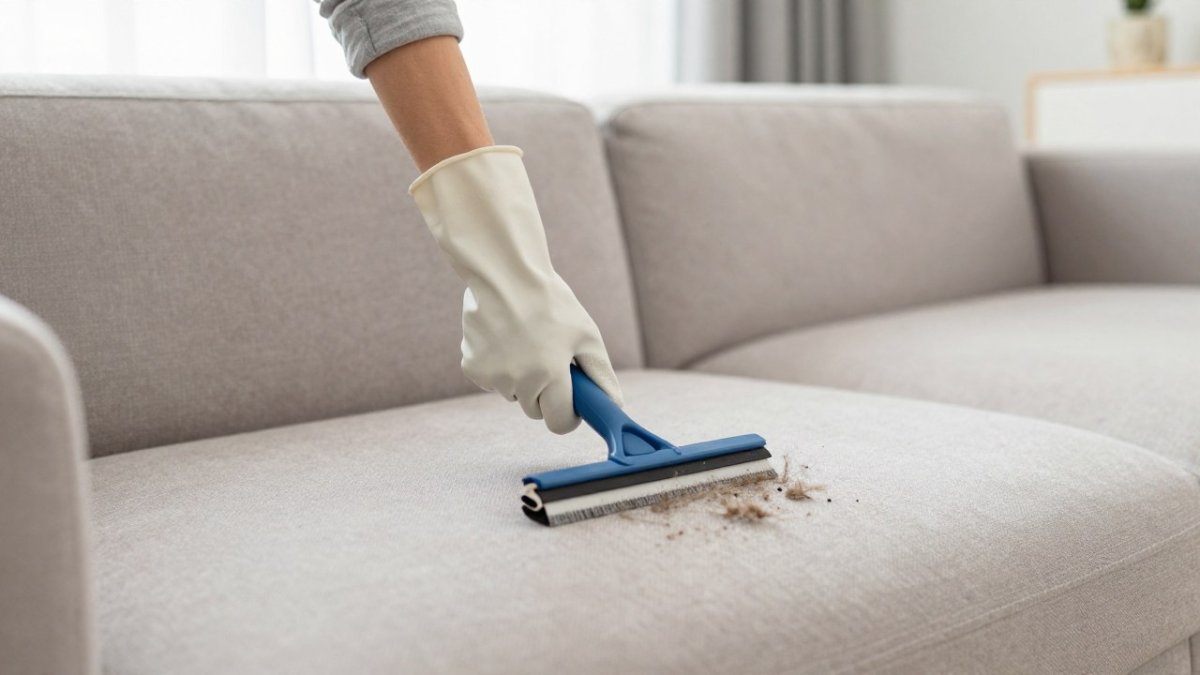
Upholstery holds hair deep in the weave, so start with a rubber glove or squeegee. Wipe in one direction, from the back of the cushion toward the front. The hair gathers into clumps you can pick up by hand. Next, go over the piece with a vacuum upholstery attachment, working slowly along the seams and under cushions, where hair hides most. A common mistake is scrubbing back and forth, which pushes hair deeper into the fabric. One steady stroke in each direction works much better.
Hard floors and carpets
On hard floors, sweep or dust-mop first to collect loose hair, then follow with a damp microfiber mop to pick up what remains. Carpets need a different approach: vacuum slowly, making two passes in different directions. If you'd rather have a professional handle it, a standard apartment cleaning covers living areas and bedrooms. Rubber squeegees also work well on low-pile rugs, pulling hair up from the base of the fibers before you vacuum.
Dusting surfaces where hair collects
Hair drifts onto baseboards, windowsills, lamp shades, and the tops of picture frames. A dryer sheet wiped along a baseboard picks up hair through static, and a damp microfiber cloth traps it on sills and shelves. Work top to bottom so hair falls onto floors you have not yet cleaned.
Maintaining your equipment after collecting fur
Hair that stays in your tools spreads back onto the next surface, so a two-minute cleanup after each session pays off.
- Vacuum brush roll: Cut wrapped hair free with scissors every few uses, and check the belt for fraying.
- Vacuum filters and canister: Empty the canister after each session, and rinse or replace filters on the schedule the manufacturer lists.
- Mop heads: Rinse microfiber mop heads in hot water and air-dry them; hair trapped in a damp mop head leaves streaks.
- Rubber squeegees and gloves: Rinse and dry them so the rubber keeps its grip.
Watch out: Never run a vacuum with a clogged filter or a jammed brush roll. Reduced airflow pushes fine hair and dander back into the room instead of capturing it, which is the opposite of what an allergy-sensitive household needs.
How to Deal With Pet Hair on Clothes
Clothing collects hair fast, especially dark fabrics and wool. Use a lint roller or damp rubber glove before the garment goes in the wash. Tape works well on delicate items, since it lifts hair without stretching the fabric.
For heavy loads, a quick 10 to 15 minute cycle in the dryer can loosen hair so it collects in the lint trap. Pulling clothes straight from the dryer and giving them a final brush also removes the stubborn bits left behind.
How to Get Rid of Dog Hair in Washing Machine and Dryer
Hair that goes through the wash can clog drain filters and leave a film on the drum. Clear the lint trap after every dryer load. Then check the washer drain filter once a month if you have a large dog.
Run an empty hot-water cycle with a cup of white vinegar once a month to clear out residue. Wipe the rubber door seal, since hair often collects in its folds.
A pet hair catcher or lint-catching laundry bag is an inexpensive way to stop hair before it reaches the machine.
Booking a Pet-Friendly Cleaning Visit With Top Royal Cleaners
Do-it-yourself methods work well for a few rooms, but a full home with multiple pets can take many hours.
If you're ready to hand off the heavy shedding work, book a pet-friendly cleaning visit with Top Royal Cleaners. Before you book, check our cleaning FAQs for answers on pricing and scheduling.
BUTTON: Get a Pet-Friendly Quote CARD_TITLE: Tired of pet hair everywhere? CARD_TEXT: Top Royal Cleaners handles pet hair in homes across Montgomery County, fully licensed and insured.
Frequently Asked Questions
How do you remove pet hair from furniture and household surfaces?
Start by vacuuming with a brush attachment, then go over upholstery with a rubber glove or rubber squeegee dampened slightly so the hair gathers into clumps. For hard surfaces, a microfiber mop or damp cloth works well. Work from top to bottom of the room so loosened hair falls to the floor where you can vacuum it up in the final pass. Check cushions, seams and the areas behind furniture, where hair tends to collect.
Does pet hair stay in the washing machine?
Yes, pet hair can cling to the drum, the door seal and the drain filter. Before each load, wipe the drum and seal with a damp cloth, and empty the lint or drain filter regularly. Pet hair caught in the filter can clog drain lines, so cleaning it out after heavy-shedding loads prevents buildup and odors.
How often should you clean to control pet hair?
Most homes with shedding pets do best with light vacuuming of high-traffic areas several times a week, a full floor and furniture pass once a week, and a deeper cleaning of baseboards, vents and upholstery every few weeks. Heavier shedding seasons, typically spring and fall, may call for more frequent sessions. A consistent schedule keeps hair from accumulating into hard-to-remove layers.