 ultimate-guide
Professional Office Cleaning Standards: A Complete Guide
Table of Contents
- What Professional Office Cleaning Standards Cover
- Office Cleaning Checklist for Daily and Weekly Tasks
- Office Cleaning Frequency by Surface and Risk Level
- Office Cleaning Procedures and Best Practices
- Office Cleaning Quality Inspection and Service-Level Agreements
- Chemical Safety and Green Cleaning Standards
- Building a Cleaning Culture and Occupant Communication
- Frequently Asked Questions
Last Updated: October 11, 2026
What Professional Office Cleaning Standards Cover
Professional office cleaning standards define the specific tasks, frequencies, and quality benchmarks that keep workplaces hygienic, safe, and productive.
Businesses with clearly defined office cleaning standards experience fewer health-related absences, higher employee satisfaction, and stronger client impressions.
Professional office cleaning standards typically include high-touch surface disinfection, restroom sanitation, workstation care, floor maintenance, glass cleaning, waste removal, and green cleaning practices.
Office Cleaning Checklist for Daily and Weekly Tasks
A structured cleaning checklist ensures nothing gets overlooked and provides clear accountability. Daily tasks focus on high-traffic areas and frequently touched surfaces, while weekly priorities address deeper cleaning that maintains long-term cleanliness.
Daily cleaning tasks
Daily cleaning priorities include:
- Wipe all high-touch surfaces with appropriate disinfectant (door handles, light switches, handrails, elevator buttons)
- Empty trash receptacles and replace liners in all areas including restrooms
- Clean and sanitize restroom fixtures (toilets, urinals, sinks, faucets, countertops)
- Sweep or vacuum main traffic areas and entryways
- Spot-clean visible spills or marks on floors and walls
- Refill restroom supplies (toilet paper, paper towels, soap, hand sanitizer)
- Wipe down common areas like break room countertops, tables, and appliance handles
- Dust visible surfaces in reception and main work areas
- Clean mirrors and glass doors at entry points
- Disinfect shared equipment (printers, copiers, door handles on shared devices)
Consistency is key: establish a set time for daily tasks, typically early morning or after business hours, to maintain better control over cleanliness.
Weekly deep-cleaning priorities
Weekly cleaning tasks should include:
- Dust all horizontal surfaces including desks, shelves, window sills, and baseboards
- Clean and disinfect all workstations and office furniture (chairs, armrests, desk surfaces)
- Wipe down glass partitions, windows, and glass doors with appropriate glass cleaner
- Deep clean restrooms: scrub toilets, sanitize tile floors, clean grout, disinfect stalls
- Vacuum or mop all carpeted areas thoroughly, including under furniture
- Clean hard floors with appropriate floor cleaner suitable for the surface type
- Disinfect shared equipment with medical-grade disinfectants and appropriate contact times
- Clean chrome fixtures, door frames, and metal surfaces
- Dust and clean light fixtures and ceiling areas where dust accumulates
- Sanitize break room appliances (microwave, refrigerator handles, sink, faucet)
Consistent weekly deep cleaning prevents emergency intensive cleaning and maintains professional standards with less effort.
Office Cleaning Frequency by Surface and Risk Level
Different surfaces and areas require different cleaning frequencies based on how often they're touched, how much contamination they accumulate, and what health risks they present.
High-touch surfaces and disinfection schedules
High-touch surfaces are primary vectors for disease transmission and require frequent disinfection with proven-effective products.
High-touch surfaces should be disinfected multiple times daily, with increased frequency in high-occupancy spaces or during illness outbreaks.
High-touch surface disinfection schedule:
- Door handles and push plates: 2-3 times daily (morning, midday, evening)
- Light switches and wall plates: 2 times daily
- Elevator buttons and railings: 3 times daily in high-traffic buildings
Medical-grade disinfectants with documented contact times are more effective than general-purpose cleaners. Surfaces must remain wet for the full contact time, typically 30 seconds to 10 minutes, to achieve the stated kill rate.
Restroom sanitation and waste removal frequency
High-traffic restrooms should be cleaned every 2-3 hours during business hours with end-of-day disinfection; lower-traffic restrooms need 2-3 daily cleanings plus weekly deep cleaning.
Restroom sanitation frequency:
- Toilet and urinal sanitizing: 3-4 times daily minimum
- Sink and faucet disinfection: 3-4 times daily
- Floor cleaning and disinfection: 2-3 times daily
Waste removal frequency depends on occupancy: high-traffic restrooms may need liner changes 4-5 times daily, lower-traffic spaces 1-2 times daily. Frequent checks prevent sanitation and aesthetic problems.
Office Cleaning Procedures and Best Practices
Effective office cleaning procedures ensure consistency, safety, and thoroughness across all cleaning tasks. These procedures guide your team on the correct method, products, and precautions for each type of surface and cleaning challenge.
Workstations, desks, and shared equipment cleaning
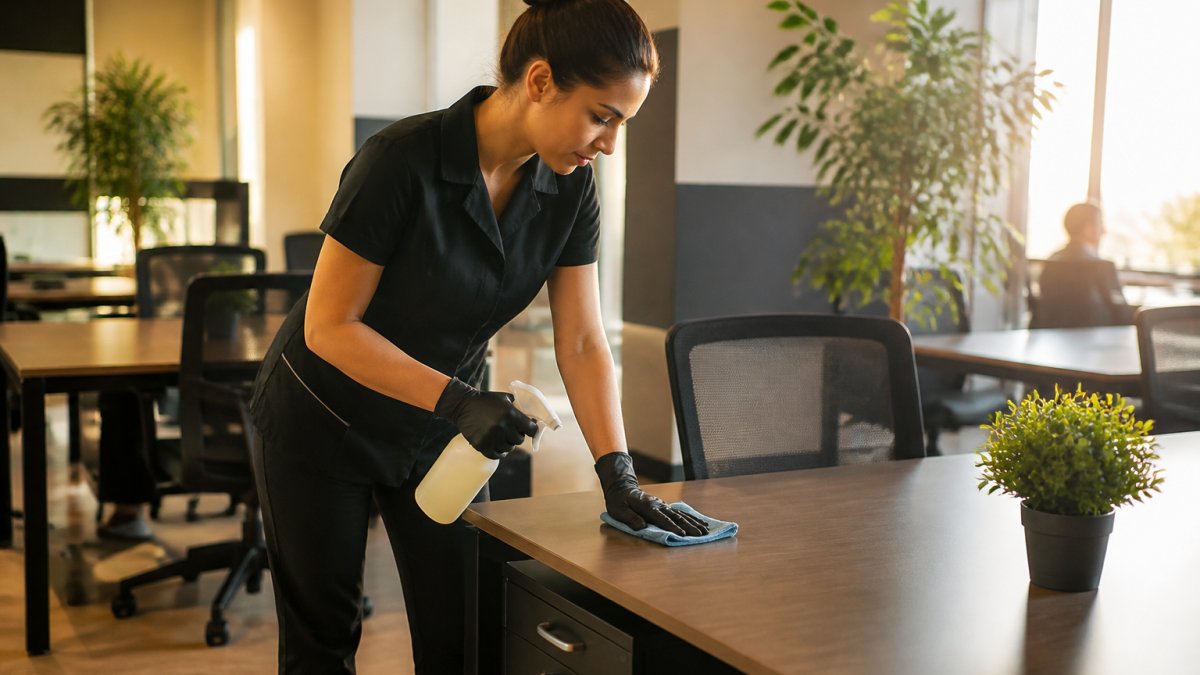
Workstations need weekly cleaning with daily spot-cleaning; shared equipment like printers and copiers require more frequent attention due to multiple users.
Workstation and desk cleaning procedure:
- Remove personal items and clutter from the surface
- Wipe down the entire desk surface with a disinfectant appropriate for the material (wood, laminate, or glass)
- Clean computer monitors, keyboards, and mice with appropriate electronics-safe cleaners
- Wipe down desk phone (or provide alcohol wipes for employees to use daily)
- Dust desk organizers, shelves, and decorative items
- Clean the underside of the desk and chair base where dust accumulates
- Disinfect chair armrests and seat area
- Wipe down filing cabinets and cabinet handles
- Clean the floor area around the workstation
- Return personal items neatly
For shared equipment like printers and copiers, use a disinfectant with appropriate contact time for high-touch areas. The top surface where paper stacks, buttons, and access panels all require disinfection. Allow contact time before wiping dry to ensure pathogen elimination.
Floor care, carpet cleaning, and hard surfaces
Hard surface floors need daily sweeping and weekly mopping; carpeted areas need daily vacuuming and quarterly deep cleaning, with increased frequency in high-traffic areas.
Floor and carpet cleaning procedures:
- For hard surfaces: Sweep or vacuum to remove loose debris, then mop with appropriate floor cleaner diluted to manufacturer specifications
- For carpets: Vacuum thoroughly, including under furniture and along baseboards
- Spill cleanup: Address spills immediately to prevent staining and slipping hazards
- Entryway mats: Clean or replace regularly to reduce dirt tracked into the office
- Baseboards: Wipe down monthly to remove dust and debris accumulation
- Grout lines: Scrub quarterly with appropriate grout cleaner to prevent discoloration and mold
- High-traffic areas: Clean more frequently as these areas show soiling faster
Many offices benefit from professional carpet cleaning quarterly or semi-annually, depending on traffic and visible soiling. This deep cleaning removes embedded dirt and allergens that regular vacuuming cannot reach.
Glass, mirrors, and chrome fixture care
Glass and reflective surfaces create visual impact in office spaces. Clean glass and mirrors make spaces feel larger, brighter, and more professional.
Glass and mirrors need weekly cleaning, more frequently in high-traffic areas; chrome fixtures benefit from weekly polishing to prevent water spots.
Glass and fixture cleaning procedure:
- Windows and glass doors: Use glass cleaner and microfiber cloths to avoid streaking; wipe in one direction for best results
- Mirrors: Clean with glass cleaner and lint-free cloth; pay attention to edges where dust accumulates
- Chrome fixtures: Wipe with appropriate chrome cleaner or microfiber cloth; dry immediately to prevent water spots
- Glass partitions: Clean both sides to ensure clarity from all angles
- Light fixtures: Dust and clean glass covers to maintain light output
- Stainless steel: Use appropriate stainless steel cleaner to maintain finish and prevent fingerprints
Standard glass cleaner works for windows and mirrors, but chrome and stainless steel need specialized products to protect finishes and prevent corrosion.
Office Cleaning Quality Inspection and Service-Level Agreements
Quality inspection ensures cleaning work meets standards and identifies improvement areas. Service-level agreements define what "clean" means and how it will be verified.
Measurable inspection criteria and standards
Measurable inspection criteria remove guesswork by defining exactly what passes inspection, rather than using subjective judgments.
Inspection criteria by area:
| Area | Inspection Criteria | Frequency |
|---|---|---|
| High-touch surfaces | No visible residue, disinfectant applied within last 4 hours | Daily |
| Desks and workstations | No dust, debris, or visible marks; organized appearance | Weekly |
| Floors | No visible debris, dust, or spills; no streaks on hard surfaces | Daily |
| Restrooms | Toilets spotless, no odor, supplies stocked, floors dry | 3-4 times daily |
| Glass and mirrors | No streaks, fingerprints, or smudges visible | Weekly |
| Trash receptacles | Empty, no debris on outside, liners intact | Daily |
| Carpets | No visible debris, stains, or matting | Daily vacuum, quarterly deep clean |
A simple inspection checklist with date and signature provides accountability and identifies patterns if problems emerge.
Service verification and accountability
Service verification confirms contracted cleaning services happen and meet agreed standards.
Verification methods include visual inspection, photographic documentation, time-tracking, and regular communication. A simple daily checklist helps identify areas not meeting standards.
A service-level agreement specifies expectations upfront, including communication about improvements needed, correction timelines, and consequences for failures.
Chemical Safety and Green Cleaning Standards
The products used in office cleaning directly affect occupant health, environmental impact, and cleaning effectiveness. Chemical safety standards ensure that disinfectants and cleaners are used safely, while green cleaning standards minimize environmental harm.
Many organizations prioritize green cleaning products that meet environmental standards while maintaining disinfection effectiveness, reducing chemical exposure and environmental contamination.
Chemical safety considerations:
- Ensure proper ventilation when using disinfectants, especially in enclosed spaces
- Use personal protective equipment (gloves, eye protection) appropriate to the chemicals being used
- Follow manufacturer contact times exactly, applying disinfectant for insufficient time reduces effectiveness
Green cleaning standards focus on reduced toxicity, biodegradable formulations, and minimal environmental impact. Many disinfectants now meet both safety and environmental standards.
Building a Cleaning Culture and Occupant Communication
Professional office cleaning standards work best when occupants understand and support them, recognizing the value of cleanliness.
Communication about cleaning schedules, procedures, and expectations helps occupants understand what's happening and why.
Strategies for building cleaning culture:
- Post visible signage indicating when and how areas are cleaned
- Communicate about disinfection schedules and products used
- Educate occupants about high-touch surface contamination and the importance of frequent cleaning
Involving occupants in setting cleaning priorities increases buy-in and satisfaction, encouraging support for protocols and early problem reporting.
Professional office cleaning standards create the foundation for a healthy, productive workplace.
At Top Royal Cleaners, with over 15 years of experience in commercial cleaning, our team understands what it takes to keep offices meeting high hygiene standards. We work with facility managers to develop customized cleaning protocols that fit your specific space, occupancy, and health priorities. Get a quote from Top Royal Cleaners and discover how professional standards can transform your workplace environment.
Frequently Asked Questions
What are the guidelines for professional office cleaning standards?
Professional office cleaning standards establish protocols for daily, weekly, and periodic tasks including high-touch surface disinfection, restroom sanitation, workstation cleaning, and floor care. Standards specify cleaning frequency based on surface type and occupancy, require documented procedures, outline chemical safety requirements, and include quality inspection criteria. These guidelines ensure a healthy workplace, reduce disease transmission, and maintain a professional environment for employees and visitors.
How often should offices use an office cleaning frequency schedule?
Office cleaning frequency depends on surface type and risk level. High-touch surfaces like door handles, light switches, and keyboards require daily disinfection. Restrooms need cleaning and sanitizing multiple times daily in high-traffic offices. Desks and workstations benefit from daily wiping. Floors should be vacuumed daily and mopped weekly. Glass and mirrors typically need weekly attention. Specialized areas like break rooms may require twice-daily attention. Professional standards recommend daily routine cleaning with weekly deep-cleaning tasks.
What should be included in an office cleaning checklist?
A comprehensive office cleaning checklist includes: daily tasks (emptying trash, wiping desks, sanitizing high-touch surfaces, vacuuming), weekly tasks (mopping floors, cleaning windows, disinfecting restrooms, wiping baseboards), and periodic tasks (carpet shampooing, deep-cleaning upholstery, cleaning air vents). The checklist should specify which surfaces require disinfectants, contact time for sanitizers, equipment needed, and responsible staff member. Include restroom specifics: toilet cleaning, urinal sanitizing, sink and counter disinfection, and waste liner replacement. A detailed checklist ensures consistency and accountability.
How can you check the quality of office cleaning?
Quality inspection involves visual assessment against measurable criteria: surfaces should be free of dust, debris, and visible soiling; restrooms should smell fresh and show no stains; floors should be free of dirt and scuff marks; trash should be emptied completely. Use a white-glove inspection method on baseboards and high surfaces. Check that disinfectants were applied with adequate contact time. Establish service-level agreements that define acceptable standards and inspection frequency. Schedule regular audits and document findings to verify compliance with office cleaning standards and procedures.
What are the 5S principles for maintaining workplace cleanliness?
The 5S methodology (Sort, Set in Order, Shine, Standardize, Sustain) is a workplace organization system that supports cleanliness. Sort involves removing unnecessary items from the office. Set in Order means organizing remaining items logically. Shine is the active cleaning step. Standardize establishes consistent procedures and schedules. Sustain creates accountability through training and monitoring. When applied to office cleaning standards, 5S ensures that workspaces stay organized, cleaning procedures remain consistent, and employees understand their role in maintaining a clean, healthy workplace environment.
What is the difference between routine cleaning and deep cleaning in an office?
Routine cleaning includes daily and weekly tasks that maintain basic cleanliness: vacuuming, dusting desks, wiping surfaces, sanitizing high-touch areas, and emptying trash. Deep cleaning addresses areas that routine cleaning doesn't cover: shampooing carpets, cleaning inside cabinets, washing windows thoroughly, scrubbing grout, and sanitizing less-frequently-touched surfaces. Professional office cleaning standards recommend routine cleaning multiple times per week with deep cleaning on a monthly or quarterly schedule depending on occupancy and industry requirements. Both are essential to maintaining workplace hygiene and a healthy office environment.
Who is responsible for office cleaning standards and procedures?
Responsibility is shared: facility managers or office managers establish cleaning standards and service agreements; professional cleaning teams execute daily and weekly procedures; employees maintain their personal workspaces between professional cleanings; supervisors conduct quality inspections and verify compliance. Clear job descriptions should define each role. Professional cleaning services document their procedures and inspection results. Employees should understand expectations for personal workspace maintenance. Establishing clear accountability ensures office cleaning standards are consistently met and that all parties understand their role in maintaining a healthy, professional workplace.