 blog
Professional vs DIY Deep Cleaning: Cost, Time & Results
Table of Contents
- Professional vs DIY Deep Cleaning: The Core Difference
- Deep Cleaning Cost: What You'll Actually Spend
- How Long Does Deep Cleaning Take
- Deep Cleaning Supplies and Equipment You'll Need
- DIY Deep Cleaning Checklist: Room-by-Room Scope
- Pros and Cons of Each Approach
- Which Option Is Right for You
- Frequently Asked Questions
Last Updated: October 17, 2026
Professional vs DIY Deep Cleaning: The Core Difference
Professional vs DIY deep cleaning represents a fundamental choice about how you maintain your home. One approach prioritizes thoroughness and expertise; the other prioritizes control and cost. Understanding what separates them helps you make the right decision for your household.
At Top Royal Cleaners, we've spent over 15 years watching homeowners navigate this exact question. The difference isn't just about who holds the mop. It's about what gets cleaned, how consistently it stays clean, and what trade-offs you're willing to accept.
Deep cleaning goes beyond routine maintenance. It targets concealed dirt, accumulated grime, and hard-to-reach areas that regular cleaning misses. Professional cleaning services bring specialized equipment, trained techniques, and consistent results. DIY deep cleaning gives you personal control and eliminates service fees, but requires significant time, physical effort, and knowledge of proper cleaning methods and product compatibility.
The core tension: professional cleaning delivers thoroughness and convenience; DIY cleaning delivers savings and autonomy. Neither is universally "better", the right choice depends on your household's specific needs, time availability, and cleaning condition.
Deep Cleaning Cost: What You'll Actually Spend
Cost is often the deciding factor. Understanding what you'll actually spend on each approach requires looking beyond the surface.
Professional deep cleaning costs vary based on home size, condition, and scope. Rather than guessing at a specific figure, we recommend getting a quote from a local service like Top Royal Cleaners to understand pricing in your area.
DIY deep cleaning requires upfront equipment investment. You'll need supplies: microfiber cloths, brushes, mops, vacuum cleaner, and cleaning products. Basic supplies cost less initially, but professional-grade equipment for deeper results (carpet cleaners, steam cleaners, specialized tools) represents a larger investment.
The real cost of DIY includes your time. Deep cleaning a typical home takes 8-16 hours depending on size and condition. If you value your time at any meaningful rate, that labor cost becomes substantial.
Professional services eliminate equipment costs and compress time dramatically, a team can complete what takes you days in a few hours. The trade-off is paying for labor and expertise upfront.
How Long Does Deep Cleaning Take
Time is the hidden cost most DIY cleaners underestimate.
A typical DIY deep cleaning takes 8-16 hours for a standard home, depending on size, current condition, and your experience level. Larger homes or those with significant accumulation require more time. If you're inexperienced with certain techniques (carpet shampooing, grout cleaning, window treatment deep cleaning), add extra hours for learning and correcting mistakes.
Professional deep cleaning typically takes 4-8 hours for the same space, completed by a trained team working simultaneously across multiple areas. Top Royal Cleaners and similar professional services compress the timeline through experience, proper equipment, and coordinated effort. What takes you an entire weekend might be completed in a single morning by professionals.
The time difference matters more than it initially appears. DIY deep cleaning often gets postponed because it feels overwhelming. Professional cleaning removes that barrier, you schedule it, and it happens on the appointed day. Consistency improves when the friction decreases.
Deep Cleaning Supplies and Equipment You'll Need
DIY deep cleaning requires the right tools. Using inadequate equipment frustrates the process and often produces mediocre results.
Essential supplies for basic DIY deep cleaning include microfiber cloths (superior to cotton for trapping dust), cleaning brushes of various sizes, a quality mop, vacuum cleaner, and multipurpose cleaning products.
Professional-grade equipment delivers noticeably better results but requires investment. A carpet cleaning machine (steam or extraction-based) costs several hundred dollars but handles carpet deep cleaning that DIY methods struggle with. A steam cleaner sanitizes hard surfaces without chemicals.
The equipment question creates a practical fork in the road. If you plan to deep clean multiple times per year, professional-grade equipment becomes economically rational. If you deep clean once or twice annually, renting equipment or hiring professionals often makes more sense than purchasing.
Chemical safety matters too. Professional cleaners understand surface compatibility and chemical interactions that most homeowners don't. Using the wrong product on marble, certain wood finishes, or delicate fabrics can cause permanent damage. Professional services carry liability insurance and know which products work safely on each surface type.
DIY Deep Cleaning Checklist: Room-by-Room Scope
A room-by-room checklist transforms deep cleaning from an overwhelming task into manageable segments. This scope defines what "deep" actually means in practice.
Kitchen Deep Cleaning Tasks
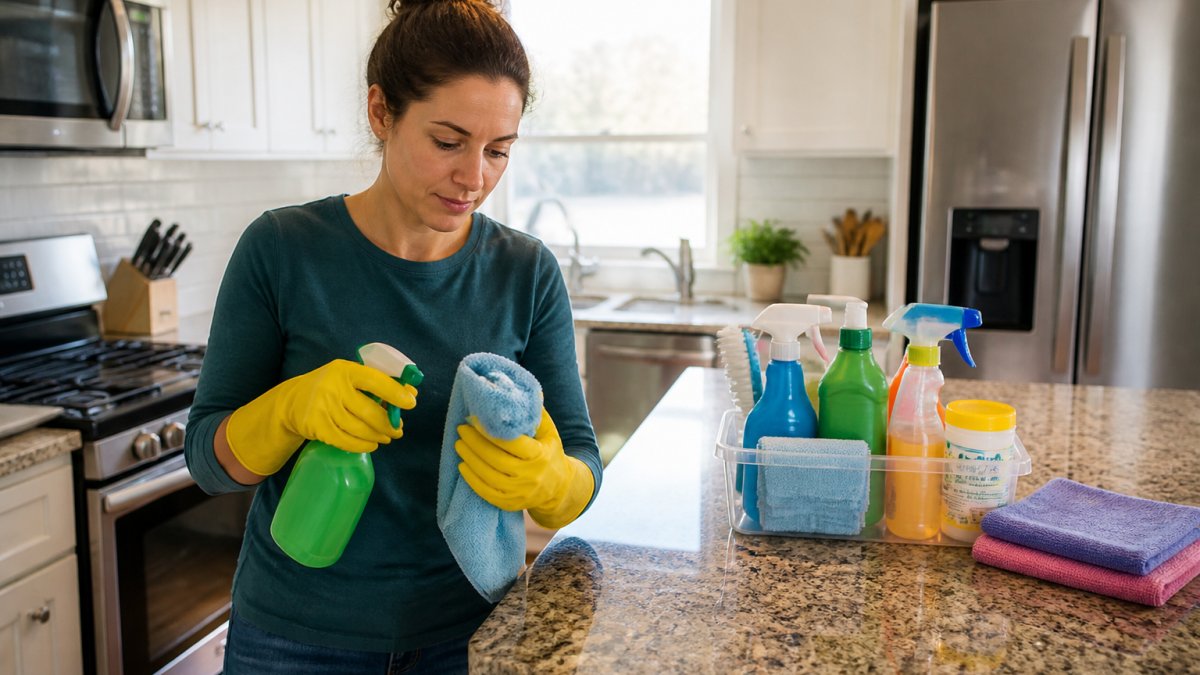
The kitchen accumulates grease, food residue, and hidden debris more than any other room. Deep cleaning here requires attention to often-overlooked areas.
Start with appliances: clean inside the microwave (heat water with lemon to loosen debris), degrease the stovetop thoroughly, wipe down cabinet exteriors and handles, and clean behind and under the refrigerator. Move to surfaces: degrease countertops, clean inside cabinets, and address any sticky residue. Handle the sink: scrub the basin, sanitize the faucet, and clean the drain. Finish with floors: sweep thoroughly, mop with appropriate cleaner, and address any grease spots.
Professional cleaners often use degreasers and steam equipment that handle kitchen buildup more effectively than standard cleaners. They access areas homeowners typically miss: above cabinets, inside exhaust hoods, and behind major appliances.
Bathrooms and Wet Areas
Bathrooms present unique challenges: moisture, mildew, hard water deposits, and soap scum require specific approaches.
Deep clean the shower or tub by scrubbing walls, removing soap scum and mildew, cleaning grout, and addressing any mold. Tackle the toilet thoroughly: scrub inside the bowl, clean the exterior, and address the base where dust accumulates. Handle the sink: clean inside and underneath, polish fixtures, and address any buildup around the drain. Address mirrors and windows: use appropriate glass cleaner and squeegee for streak-free results. Finish with floors: scrub grout lines, address any discoloration, and mop thoroughly.
Grout cleaning presents a common challenge. Standard brushes and cleaners work slowly on accumulated dirt. Professional equipment (steam cleaners or specialized grout tools) handles this significantly faster.
Bedrooms, Living Areas, and Carpets
Bedrooms and living areas accumulate dust, allergens, and hidden debris in fabrics and hard-to-reach places.
Deep clean by vacuuming thoroughly (including under furniture), wiping down baseboards, cleaning light fixtures and ceiling fans, and addressing any dust on upper surfaces. For carpeted areas, vacuum first, then consider carpet shampooing or steam cleaning for deeper dirt removal and allergen reduction.
Carpet deep cleaning represents a major DIY challenge. Standard vacuum cleaners don't remove deeply embedded dirt, pet hair, or allergens. Rental carpet cleaners work but require significant effort and technical knowledge. Professional carpet cleaning uses industrial equipment that extracts dirt more completely and dries faster, reducing mildew risk.
Pros and Cons of Each Approach
Both professional vs DIY deep cleaning offer genuine advantages. The choice depends on which benefits matter most to your situation.
Why DIY Works for Some Households
DIY deep cleaning makes sense when you have time availability, physical capability, and prefer personal control over the process.
The primary advantage is cost savings. You eliminate service fees entirely and only pay for supplies. If you already own basic cleaning equipment, your only expense is products. This appeals to budget-conscious households or those deep cleaning infrequently.
Personal control matters to some people. You decide exactly what gets cleaned, which products are used (important for chemical sensitivities or environmental preferences), and how thorough the process becomes. You know your home's specific needs better than anyone else.
DIY also works well for routine maintenance between professional cleanings. If you hire professionals twice yearly but maintain surfaces yourself in between, you balance cost and consistency effectively.
The drawbacks are significant. Time investment is substantial, a full weekend or multiple evenings for most homes. Physical effort can be exhausting, particularly for those with mobility limitations or health conditions. Results depend entirely on your technique, knowledge, and effort. Missed areas are common.
Why Professional Cleaning Delivers Better Results
Professional cleaning services bring expertise, equipment, and consistency that DIY rarely matches.
Thoroughness is the primary advantage. Professional cleaners know where dirt accumulates and use techniques that reach concealed areas effectively. They understand surface compatibility, preventing damage from incorrect product use.
Consistency matters. Professional services deliver the same quality every visit. You're not dependent on your energy level or motivation on any given day. This regularity maintains your home better than sporadic DIY efforts.
Equipment access is significant. Professional-grade carpet cleaners, steam equipment, and specialized tools handle jobs that DIY methods struggle with.
Time savings are substantial. A professional team completes in hours what takes you days. This freed-up time has real value, particularly for busy professionals and families.
Top Royal Cleaners brings 15+ years of experience, fully licensed and insured service, and pet-friendly care. This professional approach eliminates the guesswork and guarantees quality results.
The main drawback is cost. Professional services require budget allocation that DIY avoids. However, comparing true costs (including your time value) often narrows this gap significantly.
Which Option Is Right for You
The decision framework depends on four factors: time availability, physical capability, budget, and cleaning condition.
Choose DIY if you have substantial free time, enjoy the cleaning process or prefer the savings enough to justify the effort, have no physical limitations, and your home is in reasonable condition (not severely neglected). DIY works best for maintenance deep cleaning rather than addressing significant accumulated dirt.
Choose professional cleaning if time is limited, physical effort is challenging, your home needs significant attention, or you prioritize consistency and thoroughness. Professional services make particular sense for carpet deep cleaning, specialty surfaces, or homes with pets or allergies where thorough cleaning directly impacts health.
Many households benefit from a hybrid approach: professional deep cleaning 2-4 times yearly combined with DIY maintenance in between. This balances cost, consistency, and personal control.
Consider your household's specific situation. Do you have young children, pets, or health conditions that benefit from professional-level cleanliness? Is your time genuinely valuable, or do you have weekend availability? What's your physical capability for sustained cleaning effort? How quickly does your home accumulate dirt?
The choice between professional vs DIY deep cleaning isn't about which is objectively "better", it's about which aligns with your priorities and constraints. With over 15 years of experience and a 20% discount for first-time customers, we make professional deep cleaning accessible. Get a Quote and discover how professional cleaning can transform your home's cleanliness and your own peace of mind.
| Approach | Best For | Time Required | Equipment Cost | Results |
|---|---|---|---|---|
| DIY Deep Cleaning | Budget-conscious, time-available households | 8-16 hours | Low to moderate | Good with proper technique |
| Professional Service | Busy professionals, specialty cleaning needs | 4-8 hours | None upfront | Consistently thorough |
| Hybrid Approach | Most households seeking balance | Varies | Moderate | Consistent with professional backup |
Frequently Asked Questions
What is the difference between professional cleaning and regular cleaning?
Regular cleaning handles visible dirt, dust, and surface tidiness, typically weekly or bi-weekly maintenance. Professional deep cleaning targets concealed dirt, grime buildup, and hard-to-reach areas that routine cleaning misses. Deep cleaning includes tasks like baseboards, inside appliances, grout lines, ceiling fans, and under furniture. Professional cleaners use professional-grade equipment and techniques to achieve consistent, thorough results that DIY methods often cannot match.
Is it cheaper to deep clean your home yourself?
DIY deep cleaning has lower upfront labor costs since you're not paying service fees, but equipment and supplies add up quickly. Professional-grade vacuums, steam cleaners, and specialty products can cost $200-$500 initially. If you deep clean only once or twice yearly, DIY may save money. However, professional services offer faster turnaround, consistent results, and eliminate your time investment, often a better value for busy households or those with larger homes.
What supplies do you need for a DIY deep clean?
Essential deep cleaning supplies include microfiber cloths, vacuum with attachments, mop and bucket, disinfectant cleaner, degreasers, glass cleaner, and scrub brushes. For specialty tasks, you may need a steam cleaner (for carpets and upholstery), enzymatic stain removers, grout brush, and extension tools for high areas. Protective gloves and a mask are important for chemical safety. Professional services provide all supplies and professional-grade equipment, eliminating the need for you to purchase or store these items.
When should you hire a professional deep cleaner?
Hire professional cleaners when your schedule is packed, your home is large or heavily soiled, or you have allergies and need sanitizing expertise. Professional cleaning is ideal after construction, for move-ins/move-outs, before major events, or for specialty needs like pet hair removal or stain treatment. If DIY deep cleaning would take more than a full weekend, or if previous attempts left you with poor results, professional services deliver faster, more thorough outcomes and peace of mind.