 How-to
Pet Friendly Deep Cleaning Tips for 2026
Quick Summary
Pet friendly deep cleaning starts with choosing products labeled pet-safe, low-fragrance, or free of ammonia, bleach, and phenols, then cleaning in a fixed top-to-bottom order. Vacuum with a HEPA filter, use enzyme cleaners for urine stains, and keep pets out of the room until surfaces are dry.
- Cats lack the liver enzymes to process phenols and pine oils, so avoid them in cat households.
- Never mix bleach with ammonia-based cleaners, since the fumes are dangerous.
- Follow a seven-step order: start high and clean hard floors last.
- Vacuum with a HEPA filter before mopping to capture fine dander and allergens.
- For most homes with dogs or cats, a full deep clean every three months works well.
Table of Contents
- Choosing Pet-Safe Cleaning Products and Tools
- Step-by-Step Pet Friendly Deep Cleaning Workflow
- How to Remove Pet Odors from Carpet and Upholstery
- Pet Area Cleaning Checklist, Room by Room
- How Often to Deep Clean With Dogs and Cats at Home
- Book Your Pet-Friendly Deep Clean With Top Royal Cleaners
- Frequently Asked Questions
Choosing Pet-Safe Cleaning Products and Tools
Last Updated: November 13, 2026
Pet friendly deep cleaning starts with what you put on the floor.
Look for products labeled pet-safe, low-fragrance, or free of ammonia, bleach, and phenols. For a full walkthrough on removing pet dander from your home, see the step-by-step guide.
Ingredients to Avoid, and Why
- Phenols and pine oils: Cats lack the liver enzymes to process these compounds, so residue on floors and litter areas can build up. Skip pine-scented disinfectants in cat households.
- Bleach and ammonia: Fumes irritate respiratory tracts, and ammonia smells like urine to some pets, which can encourage repeat marking. Never mix bleach with ammonia-based cleaners.
- Cationic detergents (quaternary ammonium compounds): Common in fabric softeners and some disinfecting wipes; they can cause drooling, vomiting, and paw irritation if pets lick treated surfaces.
Matching Products to Surfaces
- Sealed hard floors (tile, vinyl, laminate): A pH-neutral pet-safe cleaner. Vinegar is acidic, so avoid it on natural stone such as marble or travertine.
- Hardwood: A damp microfiber mop with a pH-neutral cleaner; standing water warps seams and drives moisture into gaps where urine can soak in.
- Carpet and rugs: Enzyme cleaner for biological stains, baking soda for odor, and a HEPA vacuum for dander. Test enzyme products on a hidden spot because some can lighten wool or silk.
Ventilation and Residue Removal
Open windows and run a fan while you clean, and keep pets out of the room until surfaces are dry to the touch.
Pet-Safe Ingredients Checklist
- Mild, fragrance-free dish soap
- White vinegar diluted with water for general surfaces
- Baking soda for odors on carpet and upholstery
A HEPA vacuum matters most. It traps fine dander and allergens that a standard filter lets blow back into the air.
Watch out: "Pet-safe" is not a regulated claim on most household cleaners, so treat the label as a starting point and verify the ingredient list yourself.
Step-by-Step Pet Friendly Deep Cleaning Workflow
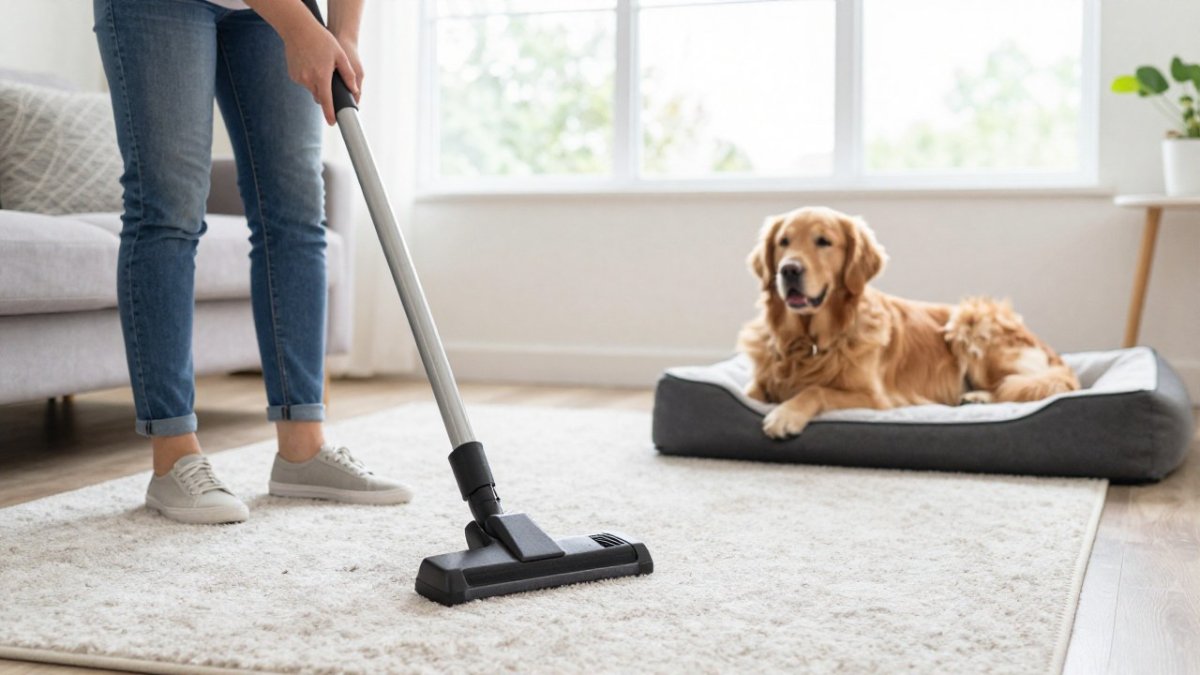
A deep clean works best when you follow the same order every time. Start high and finish low, so dust and hair fall onto areas you haven't cleaned yet.
- Clear the room and move pet items out of the way.
- Dust ceiling fans, light fixtures, and high shelves.
- Wipe walls, doors, and baseboards with a damp cloth.
- Clean windows and blinds.
- Vacuum upholstery, cushions, and curtains.
- Wash pet bedding and blankets.
- Clean hard floors last.
[VIDEO PLACEHOLDER: Demonstration of the top-to-bottom cleaning order in a living room]
Pre-Clean: Clear Surfaces and Move Pet Items
Before you start, pick up toys, bowls, and loose items. Move water and food dishes to a safe spot away from cleaning products. Keep pets in a separate room with the door closed while the floors are wet or the cleaner is still damp.
Many owners skip this step and end up with a dog walking through a drying mop line. Give each surface time to dry before pets come back in.
Floors, Upholstery, and Pet Bedding
Vacuum first, then mop. Pet hair clogs mop heads quickly, so vacuum the whole floor before any liquid touches it.
For upholstery, use a lint roller or rubber brush to lift hair before you vacuum. For more practical guidance on handling pet hair during cleaning, see our dedicated article.
The article lays out a fixed cleaning order, which a reader can scan at a glance.
| Step | What to do | Note |
|---|---|---|
| 1. Clear the room | Move pet items out of the way | Start with a clear floor |
| 2. Dust high areas | Ceiling fans, light fixtures, high shelves | Start high |
| 3. Wipe walls | Walls, doors, and baseboards with a damp cloth | Use a damp cloth |
| 4. Clean windows | Windows and blinds | Before floors |
| 5. Vacuum soft surfaces | Upholstery, cushions, and curtains | Before mopping |
| 6. Wash bedding | Pet bedding and blankets | Wash in hot water every 1-2 weeks |
| 7. Clean hard floors | Vacuum first, then mop | Finish low so dust lands on clean areas last |
How to Remove Pet Odors from Carpet and Upholstery
Pet odors usually come from urine that has soaked into padding.
Blot fresh accidents with paper towels, then apply an enzyme cleaner. Enzyme cleaners break down the proteins that cause the smell.
For general odor, sprinkle baking soda over the carpet, leave it for 15 minutes, and vacuum. Repeat for heavy smells.
[VIDEO PLACEHOLDER: Applying an enzyme cleaner to a carpet stain and blotting]
Pet Area Cleaning Checklist, Room by Room
Pets spend the most time in a few key spots.
Living room
- Vacuum sofa cushions and under them, then run a rubber brush over upholstery to lift embedded hair before vacuuming again.
- Wash throw blankets and pet beds in hot water with fragrance-free detergent.
- Clean rugs with an enzyme treatment if there's any urine history, then vacuum once dry.
Kitchen
- Pull out the food and water station, wash the mat and bowls, and mop the floor underneath.
- Wipe cabinet fronts near bowls, since splashes and drool collect there.
- Clean the floor around the bowl area last, after sweeping up kibble and hair.
Bedroom
- Wash bedding and any pet blankets weekly if pets sleep on the bed.
- Vacuum the mattress surface and bed frame, and clean under the bed where dander settles.
- Wipe nightstands and headboards that cats walk across.
Entryway
- Shake out and wash the entry mat; grit trapped in mats scratches floors and irritates paws.
- Wipe door handles and the threshold, and sweep or vacuum grit before it tracks inward.
Litter area
- Scoop daily, scrub the box with mild soap and hot water weekly, and replace litter fully rather than topping off.
- Wipe the surrounding floor and walls, and vacuum stray litter before it spreads.
- Keep the box away from food and water bowls to reduce cross-contamination.
Bathroom
- Wash pet towels in hot water, and rinse the tub after bathing to remove hair and soap residue.
- Wipe down the floor around the tub, where wet paws leave residue.
Species-Specific Adjustments
- Dogs: Focus on entryways, yards, and paw-wiping stations; wash bedding weekly during shedding season and vacuum high-traffic floors two to three times a week.
- Cats: Prioritize litter areas and vertical surfaces (cat trees, shelves, windowsills) where dander collects; avoid pine and phenol cleaners entirely.
- Birds: Clean cage liners daily, rinse surfaces twice, and keep all scented products out of the room; birds are highly sensitive to fumes and aerosols.
Allergen Reduction Routine
- Vacuum with a HEPA filter two to three times a week in pet zones, and wash pet bedding every one to two weeks.
- Wipe hard surfaces with a damp microfiber cloth weekly to capture settled dander rather than stirring it up.
- Replace HVAC filters on the schedule the manufacturer recommends, and consider a standalone HEPA air purifier in the room where pets sleep.
Check paw pads and nails during your clean too. Gritty floors and chemical residue can irritate paws, so rinse or wipe them after cleaning.
Watch out: don't clean a bird's or small mammal's cage with the same cloth or sponge you use on floors, residue and bacteria transfer easily, so keep a separate set for cage areas.
How Often to Deep Clean With Dogs and Cats at Home
For most homes with dogs or cats, a full deep clean every three months works well. Homes with heavy shedding or several pets may need one every month.
Between deep cleans, keep up a simple routine. Vacuum high-traffic floors two to three times a week.
Small pets such as rabbits, birds, and hamsters need extra care around cage areas. Use cleaners made for their setting and rinse surfaces well, since their respiratory systems are sensitive to strong odors.
Book Your Pet-Friendly Deep Clean With Top Royal Cleaners
Deep cleaning takes time, especially with several pets and a full house. Compare options in our best cleaning services for pets guide before you decide. If you'd rather hand it off, book a professional cleaning online to see your options and pick a time that works for you.
Top Royal Cleaners is fully licensed and insured, and offers a pet-friendly approach to every space we clean.
Want the step-by-step version first? Read our full guide to deep cleaning for pet owners, then reach out for a quote.
Get a pet-friendly deep clean from Top Royal Cleaners. Our licensed, insured team cleans with pet-safe products, and first-time customers save 20%.
Frequently Asked Questions
How do you deep clean a home with pets?
Start by clearing surfaces and moving pet bowls, toys, and bedding out of the way. Then work from the top of each room down: dust ceiling fans and blinds, wipe walls and baseboards, vacuum upholstery and rugs with a HEPA-filter vacuum, and wash pet bedding in hot water. Finish with hard floors, using a cleaner labeled safe for pets. Keep pets in a separate room until surfaces are fully dry and any cleaning product has been wiped or rinsed away.
What cleaning products are safe to use around pets?
Look for pet-safe cleaning products that are fragrance-free and free of bleach, ammonia, phenols, and essential oils such as tea tree, which can be toxic to cats. Check labels for the phrase safe for pets and follow the dilution directions exactly. Mild options like diluted white vinegar or unscented castile soap work well for many surfaces, but vinegar should never be used on natural stone. Always ventilate the room and keep pets out until surfaces are dry.
How often should you deep clean a home with pets?
Most homes with dogs or cats benefit from a full deep clean every three to six months, with lighter monthly tasks in between. Homes with heavy shedding, multiple pets, or allergy sufferers may need upholstery, carpets, and bedding cleaned every month. Spot-clean litter areas and pet bedding weekly, and vacuum high-traffic areas several times a week to control pet hair and dander.
How can I remove pet odors from carpets and furniture?
Blot fresh accidents with paper towels, then treat the spot with an enzymatic cleaner designed for pet odors, since enzymes break down the compounds that cause smell. Test any product on a hidden area first. For upholstery, vacuum thoroughly, apply the cleaner, and let it dwell as directed before blotting. Ventilate the room well and avoid masking odors with strong fragrances, which can make pets re-mark the area.