 how-to
Deep Cleaning Services for Pet Owners: A Complete Guide
Table of Contents
- Why Pet Owners Need Deep Cleaning Services
- How to Remove Pet Dander and Keep Air Quality High
- Pet Odor Removal From Carpet: Methods That Work
- Deep Cleaning Checklist for Pet Owners
- How Often to Deep Clean a Home With Pets
- Preparing Your Home and Pets Before Professional Cleaning
- DIY vs. Professional Deep Cleaning for Pet Homes
- Conclusion
- Frequently Asked Questions
Last Updated: October 9, 2026
Why Pet Owners Need Deep Cleaning Services
Pet owners face a cleaning challenge beyond vacuuming: hair, dander, urine accidents, and odors embed into carpets, upholstery, and flooring in ways regular cleaning can't address. That's where deep cleaning services for pet owners become essential.
Pets shed year-round, creating allergens that affect air quality and can trigger respiratory issues. Pet urine soaks into carpet fibers and padding, releasing ammonia odors that intensify with humidity.
Deep cleaning services for pet owners use industrial-grade equipment and pet-safe products to reach where household cleaners fall short. According to the American Academy of Allergy, Asthma & Immunology, pet dander and fur are leading indoor allergens that accumulate in homes with animals.
At Top Royal Cleaners, we've worked with pet-owning households across Montgomery County and Pottstown. The difference shows: air feels fresher, odors disappear, and allergy sufferers notice relief.
How to Remove Pet Dander and Keep Air Quality High
Pet dander is microscopic skin particles pets shed continuously. Unlike hair, dander floats through the air and settles on every surface, including bedding, furniture, and HVAC systems, so removing it requires more than a vacuum.
The most effective approach combines three methods:
- HEPA filtration during cleaning: Professional HEPA-filtered equipment captures dander instead of recirculating it. Household vacuums without HEPA filters spread dander around.
- Upholstery and fabric treatment: Dander embeds in couches, curtains, and bedding; steam cleaning or enzymatic treatments lift it out.
- Ductwork and ventilation cleaning: Dander accumulates in vents and ductwork, continuously releasing particles. Professionals clean these systems to stop the circulation.
Between professional cleanings, reduce dander with HEPA air purifiers in bedrooms and living areas, monthly HVAC filter changes during heavy shedding, and weekly hot-water washing of pet bedding.
Pet-safe products matter: many standard air fresheners and disinfectants irritate pets' respiratory systems. Choose products labeled pet-safe or non-toxic.
Pet Odor Removal From Carpet: Methods That Work
Pet odor from carpet is stubborn because urine soaks into carpet fibers, the padding underneath, and sometimes the subfloor. Professional pet odor removal uses enzyme treatments that break down the uric acid crystals in urine that cause the smell. Here's how the process works:
- Locate all urine spots using black light detection
- Apply enzyme-based treatment to affected areas
- Allow the treatment to sit for the recommended time
- Extract the treatment along with dissolved urine particles
- Allow carpet to dry completely
Enzyme treatments are pet-safe and work biologically rather than masking odors. Unlike baking soda or vinegar, which only cover the smell temporarily, enzymes eliminate the source.
For severe or recurring odor, professionals may recommend replacing carpet in affected areas or full removal followed by subfloor treatment, preventing odor from returning after new carpet is installed.
Deep Cleaning Checklist for Pet Owners
Most cleaning checklists are written for homes without animals. A pet-home deep clean must be sequenced differently, because hair, dander, and urine residue get redistributed every time you move to a new surface. Work top-to-bottom and dry-to-wet, and treat this checklist as an order of operations, not a menu.
Phase 1: Dry work first (before any liquid touches a surface)
- Open windows and run a HEPA air purifier in the starting room. Disturbing settled dander without filtration just moves it around.
- Vacuum with a HEPA-filtered vacuum, using slow overlapping passes; fast passes leave embedded hair behind.
- Vacuum upholstery with a brush attachment, including under cushions and along the decking.
- Vacuum baseboards, window sills, and door frames, where hair and dander collect out of sight.
- Vacuum or brush out air vents and cold-air returns before cleaning floors so dislodged debris gets picked up.
- Replace the HVAC filter. A clogged filter recirculates dander for the rest of the clean.
Phase 2: Urine and stain detection
- Walk the home with a UV black light after dark or with blinds closed. Uric acid crystals fluoresce yellow-green under UV.
- Mark each spot with painter's tape so you don't lose track of it once you start treating.
- Note whether the spot is surface-level or has soaked through. Press a clean white towel into it; if moisture wicks up from below, the padding is likely affected.
Phase 3: Wet work, soft surfaces first
- Apply an enzyme-based cleaner to each marked spot. Follow the label's dwell time, typically 10 to 30 minutes for fresh spots and longer for old ones; enzymes need contact time to break down uric acid crystals.
- Blot, don't scrub. Scrubbing pushes residue deeper into the backing.
- Hot-water extract or steam clean carpets and rugs only after the enzyme treatment has fully dried; doing it while wet dilutes the enzyme.
- Steam clean upholstery, or use a low-moisture upholstery tool. Over-wetting couch cushions can cause the foam to mildew.
- Wash pet bedding, throw blankets, and slipcovers in the hottest water the care label allows. Add a half cup of white vinegar to the rinse if odor lingers.
Phase 4: Hard surfaces and detail work
- Mop hard floors with a pH-neutral pet-safe cleaner. Avoid anything with ammonia, bleach, or pine oil around pets.
- Clean grout lines in kitchens, bathrooms, and mudrooms. Grout is porous and holds odor-causing bacteria.
- Wipe cabinet fronts, handles, and the pet feeding station. Food bowls and mats should be washed, not just wiped.
- Clean under and behind appliances where kibble and hair collect.
- Wipe down light switches, door handles, and pet gate latches, which are high-touch and rarely cleaned.
Phase 5: Air and finish
- Run the HEPA air purifier for at least an hour after cleaning to pull remaining airborne particles.
- Let all carpets and upholstery dry fully before pets return. Damp carpet attracts re-soiling and can grow mildew within 24 to 48 hours.
- Empty the vacuum canister or replace the bag outside, not in the kitchen trash.
How Often to Deep Clean a Home With Pets
There's no single correct interval. The right schedule depends on four variables: shedding, accidents, flooring, and whether anyone has allergies or asthma. Use the framework below instead of guessing.
Step 1: Score your shedding load
- Low: Short-coated or hairless breeds, or pets regularly groomed and bathed. Expect minimal hair accumulation.
- Moderate: Most short- and medium-coated dogs and cats. Hair appears on dark clothing and furniture within days of vacuuming.
- High: Double-coated breeds, long-haired cats, and seasonal coat-blowers. Hair reappears within hours of vacuuming during shedding peaks.
Step 2: Score your accident frequency
- Rare: Housetrained adult pets with no medical issues. Accidents are one-off events.
- Occasional: Senior pets, puppies or kittens in training, or pets with stress-related marking.
- Frequent: Pets with incontinence, chronic marking, or conditions like diabetes or kidney disease. These homes need weekly spot treatment, not just periodic deep cleans.
Step 3: Factor in flooring and soft surfaces
Step 4: Factor in household health
If anyone has diagnosed allergies or asthma triggered by pet dander, treat the schedule as a medical need.
Putting it together: a working schedule
| Shedding | Accidents | Flooring | Suggested deep clean interval |
|---|---|---|---|
| Low | Rare | Mostly hard | Every 9 to 12 months |
| Low | Rare | Mostly carpet | Every 6 to 9 months |
| Moderate | Occasional | Mostly hard | Every 6 months |
| Moderate | Occasional | Mostly carpet | Every 4 to 6 months |
| High | Frequent | Mostly carpet | Every 8 to 12 weeks |
| Any | Any | Any, with allergy-sensitive resident | Every 8 to 12 weeks, plus weekly HEPA vacuuming |
These are starting points, not rules.
Prioritize by room, not just by calendar
Even between deep cleans, some rooms need more attention than others:
- Bedrooms: Highest priority if anyone sleeps with a pet or has allergies. Vacuum and wash bedding weekly.
- Living rooms: High-traffic upholstery and rugs. Spot-treat accidents immediately.
- Entryways and mudrooms: Where outdoor dirt, pollen, and paw debris enter. Mop weekly.
- Litter box areas: Scoop daily, change litter weekly, and deep clean the surrounding floor monthly.
- Kitchens: Pet feeding stations attract pests and hold odor. Wipe daily, deep clean monthly.
Seasonal adjustments
Most double-coated pets blow coat in spring and fall. During those windows, add an extra vacuuming pass per week and consider moving your next professional deep clean up by a few weeks.
Preparing Your Home and Pets Before Professional Cleaning
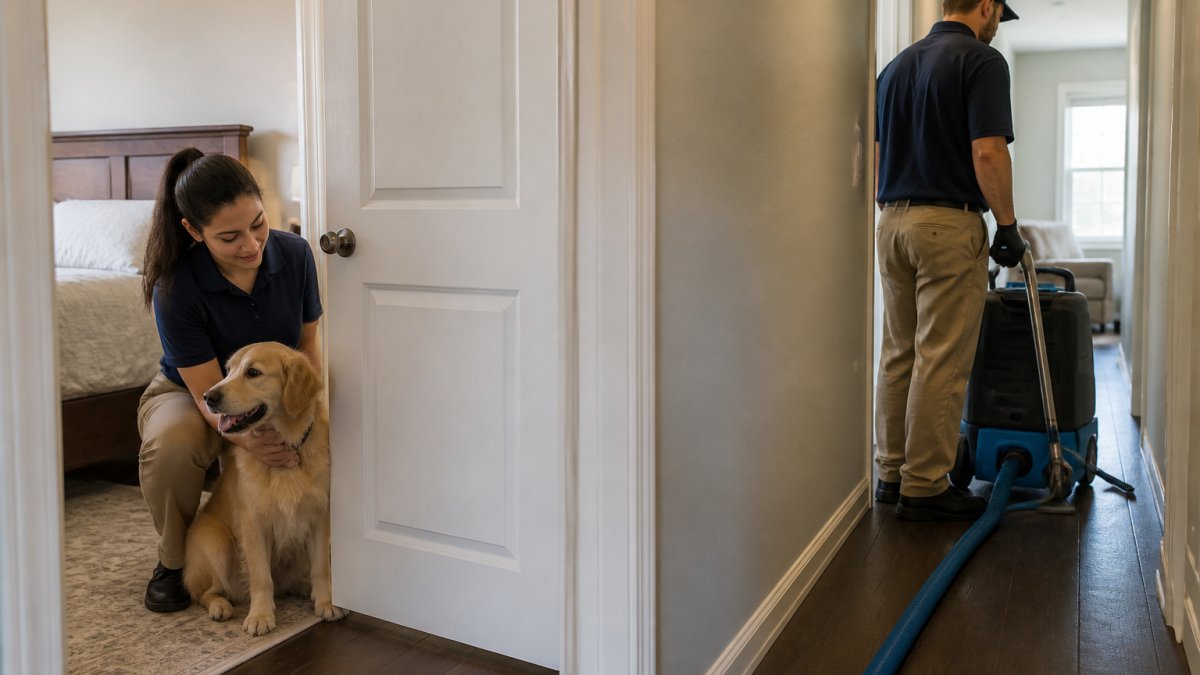
Securing Your Pets: Decide where pets will stay during cleaning: a separate room with a closed door, a boarding facility, or a friend's house.
Clearing Clutter: Remove items from floors, furniture, and surfaces. Cleaners can't deep clean under piles of clothes, toys, or books.
Protecting Valuables: Secure anything breakable or valuable; industrial equipment and water extraction can create risks around fragile items.
Pre-Cleaning Tasks: Vacuum lightly before cleaners arrive to remove loose surface hair so deep cleaning equipment can work more effectively on embedded dirt and odors.
DIY vs. Professional Deep Cleaning for Pet Homes
The decision between DIY and professional deep cleaning depends on your time, equipment, budget, and the severity of pet-related issues in your home.
DIY Deep Cleaning:
DIY cleaning gives you control and saves money upfront.
Professional Deep Cleaning:
Professional services bring industrial-grade equipment, specialized products, and experience with pet-specific problems. A typical home takes 4-6 hours, with more thorough, consistent results.
Top Royal Cleaners uses equipment and methods designed for pet homes.
Professional cleaning is worth it with multiple pets, severe odors, allergic family members, or no time for DIY.
Conclusion
Deep cleaning services for pet owners address problems regular cleaning can't solve. Pet hair, dander, urine, and odors require specialized equipment, pet-safe products, and methods designed for animal households.
Top Royal Cleaners has been helping pet owners in Montgomery County and Pottstown maintain fresh, clean homes for over 15 years. We're fully licensed and insured, and we understand the unique challenges pet owners face. Our team uses pet-friendly deep cleaning methods that eliminate odors and allergens while keeping your animals safe. Get a quote today and discover how professional deep cleaning can transform your home, and your family's health.
Frequently Asked Questions
How do professional cleaners remove pet hair and dander during deep cleaning?
Professional cleaners use industrial-grade equipment including HEPA-filter vacuums, steam cleaning for carpets and upholstery, and enzyme-based treatments to break down dander at the source. They work systematically through each room, targeting high-shedding areas like furniture, baseboards, and air vents where pet hair and allergens accumulate. This level of deep cleaning removes far more pet hair and dander than standard household vacuums can capture.
Should pets be out of the house during a deep clean?
Yes, it's best to keep pets away during professional deep cleaning. Removing pets prevents stress to your animals, ensures cleaners can access all areas without interruption, and protects pets from exposure to cleaning solutions during application and drying. Most professional cleaning services recommend securing pets in a separate location for 2-4 hours, depending on the scope of work and product drying times.
Are deep cleaning products safe for pets?
Pet-friendly cleaning services use non-toxic, pet-safe products specifically formulated to be safe around animals. However, during active cleaning, it's still wise to keep pets away until surfaces dry completely. Always ask your cleaning provider about the specific products they use and their safety certifications. Reputable services will provide documentation and be transparent about ingredient safety for households with pets.
How often should pet owners schedule a deep cleaning?
Factors like carpet type, pet breed, allergies in the household, and activity level affect frequency. Between professional deep cleanings, weekly vacuuming and spot treatment help maintain cleanliness and reduce odors, extending the time between full deep cleaning visits.