 how-to
How to Prepare Home for Professional Cleaners
Table of Contents
- Why Preparation Matters Before Professional Cleaners Arrive
- House Cleaning Checklist Before Cleaner Arrives
- Should I Clean Before the Cleaners Come
- How to Prepare Pets for House Cleaners
- What to Tell House Cleaners Before They Start
- Confirm Scope Before the First Visit
- Communicate Priorities and Special Instructions
- Discuss Cleaning Products and Surface Sensitivities
- Confirm Access, Arrival Time, and Household Logistics
- Household Members, Kids, and Working From Home
- Payments, Tipping, and Cancellation Logistics
- A Quick Pre-Visit Message Template
- Preparing Your Home on Cleaning Day
- Frequently Asked Questions
Last Updated: October 13, 2026
Why Preparation Matters Before Professional Cleaners Arrive
Learning how to prepare home for professional cleaners lets the team focus on deep cleaning instead of moving clutter.
At Top Royal Cleaners, prepped homes get better results: the team works faster, reaches more areas, and you get spotless spaces without the stress.
This guide covers how to prepare home for professional cleaners, with a checklist, what to communicate beforehand, and how to handle pets and logistics.
House Cleaning Checklist Before Cleaner Arrives
Clear Surfaces and Declutter
Start by clearing tables, counters, and nightstands. The team needs flat, empty surfaces to dust and wipe properly.
Walk through each room and move anything that doesn't belong, mail, dishes, toys, personal items, to its proper place.
Quick decluttering tips:
- Put away kitchen appliances you don't use daily
- Move decorative items to a shelf or closet temporarily
- Clear bathroom counters of bottles, jars, and personal items
Pick Up Clothing and Personal Items
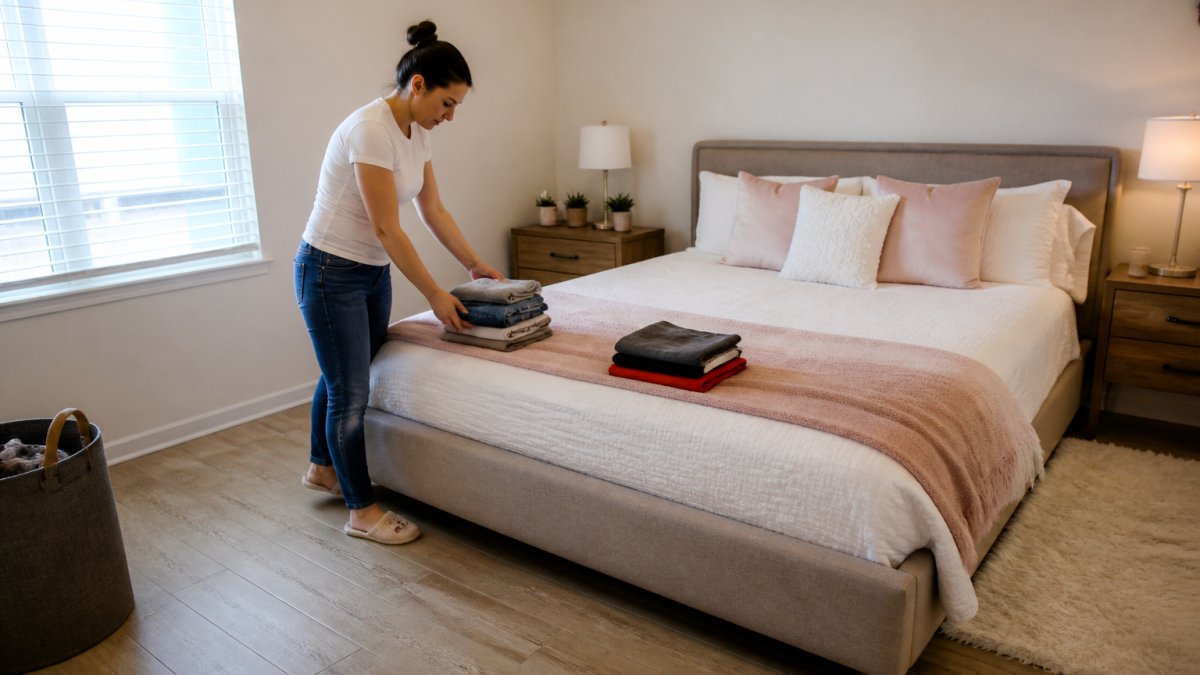
Clothes on the floor are a major obstacle. Put every item away in closets, drawers, or a laundry basket.
Don't leave clothes piled on chairs, beds, or the floor, cleaners can't dust around them. Pack away toys, books, and anything else on floors or surfaces so the team can move freely.
Items to put away:
- Dirty laundry in a hamper
- Clean clothes in drawers or closets
- Shoes in a shoe rack or closet
Put Away Valuables and Private Items
Remove or secure anything valuable, fragile, or private before the crew arrives, this protects both you and them.
Put jewelry, cash, important documents, electronics, and collectibles in a locked drawer or safe. It's not about distrust, it's about protecting what matters. Medications and personal letters should also be put away yourself.
What to secure:
- Jewelry and watches
- Cash and credit cards
- Passports and important documents
Clear Pathways and Move Obstacles
The team needs clear pathways. Remove anything blocking doorways, hallways, or access to closets and storage.
Move chairs away from walls, pull your cleaning equipment out of the way, and relocate hallway coat racks. Move lightweight chairs and small tables yourself so the team can clean underneath, and point out heavier pieces.
Clear these areas:
- Hallways and doorways
- Paths to bathrooms
- Space around the kitchen
Should I Clean Before the Cleaners Come
You don't need to deep clean before the professionals arrive, but light tidying helps. Tidying is picking up clutter; cleaning is washing and sanitizing.
Do the tidying. Don't do the cleaning.
By picking up clutter and putting away personal items, you're not doing their job, you're removing obstacles so they can do it faster and better.
Don't worry that your home isn't clean enough, professional teams expect lived-in homes. What they need is access and clarity about your priorities.
How to Prepare Pets for House Cleaners
Pets need special attention on cleaning day. Most teams are comfortable around animals, but your pet needs to feel safe and secure.
Secure your pet in a quiet room away from the main cleaning areas, a bedroom, office, or den, with water, food, and a place to rest.
Tell your cleaners about your pet before they arrive: name, temperament, and special needs. For pets with product allergies or sensitivities, this conversation is critical.
Pet preparation steps:
- Secure your pet in a quiet, comfortable room
- Provide water, food, and a litter box or potty pad
- Leave toys or comfort items to reduce anxiety
What to Tell House Cleaners Before They Start
A five-minute conversation before the first appointment prevents most later friction: confirm what's included, what isn't, and who will be home.
Confirm Scope Before the First Visit
For a first visit, get the scope in writing before cleaning day and read the standard checklist line by line. Most services include the same core tasks, dusting, vacuuming, mopping, bathroom sanitizing, kitchen wipe-down, and trash removal, but everything around the edges varies.
Common items that are not included unless you add them:
- Inside the oven
- Inside the refrigerator
- Inside cabinets and drawers
Ask three specific questions:
- What's on the standard checklist, and what costs extra? Get the answer in writing, email or text is fine.
- How long is the appointment scheduled for? A 2-hour slot and a 4-hour slot produce very different results in the same house.
- How many cleaners will arrive? One person for four hours and three people for ninety minutes are not the same service, even at the same price.
Book any add-ons (inside oven, fridge, interior windows) at the same time as the standard clean, adding them on arrival usually isn't possible because the crew's schedule is set.
Communicate Priorities and Special Instructions
Tell the lead cleaner which two or three rooms matter most, "Kitchen and primary bathroom are the priority; the guest room can be light" does more than a paragraph of general notes.
Be specific: "the shower has hard water stains" is useful, "the bathroom needs work" is not. Mention any stain you've already tried to remove. Flag anything that shouldn't be moved or treated roughly, antiques, wobbly tables, frayed cords, in person if possible, with a sticky note as backup.
Discuss Cleaning Products and Surface Sensitivities
Allergies and sensitivities are a safety issue, not a preference. If anyone reacts to fragrance, bleach, ammonia, or specific chemicals, say so before the crew unloads, many services carry fragrance-free options but need to know to bring them.
Surfaces that need special handling:
- Natural stone (marble, granite, travertine): acidic cleaners etch the surface. Ask for pH-neutral products.
- Hardwood and engineered wood: too much water warps planks. Damp-mop only.
- Sealed or unsealed grout: abrasive scrubbers strip sealant.
If you want your own products used, group and label them in one place and confirm in advance so the team doesn't bring duplicates.
Confirm Access, Arrival Time, and Household Logistics
Access is the most common point of failure on a first appointment. Decide how the crew will get in:
- You'll be home: simplest option. Just make sure you're actually there when the window opens.
- Lockbox or keypad: share the code in writing the day before, and confirm it works.
- Hidden key: tell the lead cleaner exactly where, and only the lead cleaner.
Also confirm parking, any gate code, and whether the crew should lock up when they leave.
Household Members, Kids, and Working From Home
If anyone will be home during the clean, decide where they'll be and tell the crew.
- Remote workers: pick one room as your base and let the crew know it's off-limits until you say otherwise. Headphones help, but a closed door helps more. If you have back-to-back calls, mention the schedule so the crew doesn't vacuum outside your door at the worst moment.
- Kids: school-age kids can usually stay in one room with a screen or activity. Toddlers and infants are better off out of the house or in a room the crew isn't cleaning yet. If a nap is happening, tell the crew which room and ask them to work the far side of the house first.
- Guests or roommates: let the crew know how many people are in the home and where they'll be. A surprise guest in a bathrobe is awkward for everyone.
Payments, Tipping, and Cancellation Logistics
Sort these out before the first visit:
- Payment method: confirm whether the service takes card, ACH, check, or cash, and whether payment is due before, during, or after the clean.
- Tipping: tipping is optional and not expected, but it's common to tip 10-20% for a job well done, especially around the holidays or after a deep clean. Cash in a labeled envelope on the counter is the simplest approach.
- Cancellation policy: ask how much notice is required (24-48 hours is typical) and what the fee is for a late cancellation or lockout.
A Quick Pre-Visit Message Template
If you'd rather text than talk, this covers the essentials:
Hi, looking forward to [date]. A few notes: entry is via the keypad, code is [XXXX]. Our dog is friendly but will be in the back bedroom with the door closed. Kitchen and primary bath are the priority; guest room can be light. Please use the fragrance-free products on the shelf under the sink. I'll be working from the office, please skip that room until I come out. Thanks!
That single message handles access, pets, priorities, products, and household logistics in under 100 words.
Preparing Your Home on Cleaning Day
The last 24 hours decide whether appointments go smoothly. Use this three-stage timeline.
The Day Before
- Confirm the appointment. A short text or email locks in the arrival window and lets you flag changes, a sick pet, new furniture, a room that no longer needs service.
- Finish the decluttering pass. This is the last realistic window to clear counters, floors, and nightstands, once the crew is in the driveway, it's too late.
- Set out supplies or note where they are. Group your products in one visible spot, under the kitchen sink or on a laundry shelf, and label specialty items (wood floor cleaner, granite spray, stainless polish) so nothing gets swapped.
The Hour Before
- Do a 10-minute pickup. Breakfast dishes into the dishwasher, mail into a drawer, shoes into the closet, this is a tidy, not a clean.
- Clear the kitchen sink and counters. Crews typically need the sink for rinsing cloths and emptying mop buckets. A sink full of dishes slows the whole kitchen down.
- Move lightweight furniture if you want under it cleaned. Slide out dining chairs, ottomans, and small side tables; leave heavy pieces like sectionals and dressers in place and point them out.
Arrival Time
- Be reachable. If you're leaving, keep your phone on and answer texts quickly, crews run into locked doors, stuck gates, and confused pets, and a quick reply solves all three.
- Meet the lead cleaner at the door if you can. A 60-second walkthrough beats a three-paragraph note, point out priority rooms, off-limits areas, and where supplies are.
- Leave a written note if you can't be there. Include entry instructions, Wi-Fi password, pet name and location, and rooms to skip, taped inside the door, not outside.
- Confirm the exit plan. Will the crew lock up, leave a key, or text when done? Agree before they start, not after.
After the Walkthrough
If you're home when the crew finishes, do a quick 5-minute walkthrough. Point out what looks great, crews remember positive feedback. If something was missed, mention it before they pack up; most issues take two minutes to fix on the spot but become a callback if you wait.
Frequently Asked Questions
What should I do before professional cleaners arrive?
Start by clearing clutter and personal items from surfaces, picking up clothing and belongings from floors, and putting away valuables. Secure pets in a separate room, clear pathways for cleaning equipment, and provide access instructions or keys. Finally, communicate your cleaning priorities and any special instructions to the cleaning service before they arrive.
Should I clean my house before the cleaners come?
No, you don't need to deep clean before professional cleaners arrive. However, you should declutter by removing personal items, picking up clothing, and clearing floors and surfaces. This preparation allows cleaners to work efficiently and focus on actual cleaning rather than moving obstacles around your home.
How do I prepare pets for house cleaners?
Secure pets in a separate, comfortable room away from the cleaning activity. Provide food, water, and a litter box or potty pad if needed. Inform the cleaning service about your pets and any behavioral concerns. For cleaning services with a pet-friendly approach, discuss how to minimize disruption while the team works, especially for homes with dogs or cats that shed.
What should I tell professional cleaners about my home?
Communicate your cleaning priorities, which rooms need the most attention, and any high-traffic areas. Mention surface sensitivities, allergies, or specific cleaning products you prefer. Discuss access instructions, arrival time, and whether anyone will be home. Clarify payment, tipping expectations, and cancellation policies upfront to avoid confusion.