 blog
Pet-Safe Alternatives to Chemical Floor Cleaners
Quick Summary
Pet-safe floor cleaners are mild, low-fragrance products labeled non-toxic, with short ingredient lists and no residue pets can reach. Simple DIY options like diluted white vinegar or a drop of mild dish soap also work for routine cleaning, with careful rinsing.
- Avoid bleach, ammonia, phenolic compounds, concentrated degreasers and essential oils around pets.
- Dilute white vinegar at 1/4 cup per gallon of warm water for routine dirt on sealed floors.
- Mop with a barely damp pad, rinse with plain water, and keep pets out until the floor is dry.
- Keep the room closed until the floor is dry, which usually takes at least 20 to 30 minutes.
- Never mix vinegar with bleach, because the combination releases chlorine gas.
Table of Contents
- Why Chemical Floor Cleaners Are a Risk for Pets
- Floor Cleaner Ingredients to Avoid Around Pets
- Best Floor Cleaner Safe for Cats and Dogs
- Pet-Safe DIY Floor Cleaner Recipes
- Matching Alternatives to Your Floor Surface
- How to Clean Floors with Dogs Without Leaving Residue
- Scheduling Your Next Floor Clean with Top Royal Cleaners
- Frequently Asked Questions
Why Chemical Floor Cleaners Are a Risk for Pets
Last Updated: November 21, 2026
Pet owners searching for alternatives to chemical floor cleaners for pet owners usually have one concern: their dog or cat walks, rolls and licks across the floor every day, so they look for pet-safe floor cleaners that leave nothing harmful behind. At Top Royal Cleaners, we clean homes across Montgomery County and Pottstown, and pet-friendly care is part of how we approach every space we clean. Pet-safe floor cleaners generally use simpler ingredients, but always check the label for the specific product you use.
Many conventional floor cleaners contain strong ingredients that can irritate skin, eyes and airways. Pets are closer to the floor than people are, and they spend more time lying on it. That means they pick up residue on their paws and coat, then lick it off during grooming.
Here is what matters most when you choose a floor cleaner:
- Read the label for warnings about ingestion, skin contact and inhalation.
- Check whether the product needs to be rinsed off, and how long it stays wet.
- Keep pets out of the room until the floor is completely dry.
A common mistake is assuming that a product marketed as "natural" or "gentle" is automatically safe for pets. Labels are not always clear, so check the ingredient list and the safety data sheet when you can.
Floor Cleaner Ingredients to Avoid Around Pets
Most pet-safe floor cleaner advice stops at "avoid bleach and ammonia." That is not enough to make a real decision. The risk depends on how a pet is exposed, how much reaches them, and how their body handles the chemical. The three exposure routes matter differently for dogs and cats.
Ingestion is the route owners worry about most, but it is rarely a pet lapping cleaner straight from a bucket. More often, a pet walks through residue, grooms its paws, and swallows a small amount over time. Cats are especially efficient at this because they groom constantly. Skin contact matters for pets with thin coats or bare skin on the belly and paws, and it is the route most likely to cause localized irritation. Inhalation is the route owners underestimate: concentrated cleaners and aerosol sprays release vapors near the floor, exactly where a pet's nose sits. A dog or cat in a closed room during mopping can inhale more than a person standing upright.
With that framework, here is what to avoid and why.
- Bleach (sodium hypochlorite). Corrosive at full strength and a respiratory irritant even diluted. Splash residue on a floor can irritate paw pads, and the fumes concentrate in small rooms. Never mix bleach with ammonia or vinegar, the reaction releases toxic gas (the CDC).
- Ammonia. A respiratory and eye irritant, and a common trigger for pets with sensitive airways. It is also a poor choice for urine cleanup because the smell can encourage a pet to re-mark the same spot.
- Phenolic compounds. Found in older disinfectants and some pine-oil cleaners. Cats lack a specific liver enzyme (glucuronyl transferase) that helps break these down, so exposure can build toward toxicity. This is one of the clearest species differences between cats and dogs.
- Concentrated degreasers and quaternary ammonium compounds (quats). Common in "heavy-duty" floor cleaners. They leave a film that pets pick up on paws, and quats are linked to skin and respiratory irritation. A diluted product is not automatically safe if it is not rinsed.
- Essential oils. Many are harmful to cats even in small amounts, and some are irritants to dogs. Tea tree, eucalyptus, citrus, and pine oils are common offenders in DIY mixes. Skip oil-heavy recipes if you have a cat.
Watch out: a label that says "natural" or "plant-based" is not a safety claim. Check the ingredient list and the safety data sheet, and treat any product labeled "corrosive," "toxic if swallowed," or "avoid contact with skin" as unsafe for a home with pets.
When to call for help (ASPCA Poison Control | (888) 426-4435). If a pet walks through a cleaner and then licks its paws, rinse the paws with plain water and watch for drooling, vomiting, lethargy, or pawing at the mouth. For known ingestion of a concentrated product, or for any cat exposed to a phenolic or essential-oil cleaner, contact your veterinarian or a pet poison-control service right away rather than waiting for symptoms. Bring the product label or safety data sheet with you, it speeds up the assessment. Store all cleaners out of reach, and never leave a bucket on the floor where a pet can drink from it.
Best Floor Cleaner Safe for Cats and Dogs
There is no single perfect product, but a pet-safe floor cleaner is usually mild, low in fragrance and designed to rinse clean. Look for a product labeled as pet-safe or non-toxic, with a short ingredient list you can recognize.
Test any new product on a small, hidden area first. Watch for dulling, discoloration or a sticky film, especially on sealed wood and laminate. A product that works well on tile may be too harsh for a finish that is not designed for it.
The best choice is the one that cleans your floor well and leaves no residue your pet can reach.
Pet-Safe DIY Floor Cleaner Recipes
A single "pet-safe" recipe does not fit every mess. Grease, urine, routine dirt, and odor each respond to different ingredients, and the wrong mix can damage a floor finish or leave residue a pet will lick. The recipes below are measured, task-specific, and paired with the floor types they suit. Sweep or vacuum first, mopping over hair and grit just spreads it.
Routine dirt on sealed hardwood, laminate, and tile
Mix 1/4 cup of white vinegar with 1 gallon of warm water (roughly a 1:64 ratio). Apply with a damp microfiber mop, not a soaking one, then wipe dry. It is not a disinfectant, so do not expect it to kill pathogens, for that, use a product labeled for the purpose and follow its rinse instructions.
Watch out: vinegar is acidic and can etch some natural stone, and it can dull unsealed or waxed wood. Check the flooring manufacturer's care instructions before using it on any surface.
Grease and sticky kitchen residue on tile and sealed stone
Mix 1 teaspoon of mild dish soap in 1 gallon of warm water. A few drops go a long way; more soap means more film. Mop, then rinse with a clean damp mop and plain water. Avoid dish soaps with added fragrance or essential oils if you have a cat.
Urine and odor on sealed floors
Urine is the mess that most often drives owners to chemical cleaners, and it is also the one where the wrong product makes things worse. Start by blotting fresh urine with paper towels, then clean with the 1/4 cup vinegar to 1 gallon water solution. For lingering odor, sprinkle baking soda on the dry floor, let it sit 15 to 30 minutes, and vacuum it up before mopping. Do not use ammonia-based cleaners on urine spots, the smell can prompt a pet to re-mark the area.
Light stains and grout lines
Make a paste of 3 parts baking soda to 1 part water, apply to the stain or grout line with a small brush, let it sit 10 minutes, then rinse thoroughly. This is a spot treatment, not a whole-floor cleaner; baking soda left on a floor leaves a chalky residue that pets can track.
What these recipes do not do
None of these mixes is a substitute for a disinfectant when a pet is ill or has had an accident involving bodily fluids. In those cases, use a product labeled for the job, follow the dilution and contact time on the label, rinse, and keep pets off the floor until it is fully dry.
Dilution and storage. Measure rather than eyeball, a "splash" of vinegar can be several times the intended concentration. Mix only what you will use in one cleaning, label the bottle, and keep it out of reach. Never combine vinegar with bleach; the mixture releases chlorine gas.
Here is a quick reference for the recipes and their ratios, drawn from the guidance above.
| Task | Recipe | Best for |
|---|---|---|
| Routine dirt | 1/4 cup white vinegar per 1 gallon warm water | Sealed hardwood, laminate, tile |
| Grease residue | 1 teaspoon mild dish soap per 1 gallon warm water | Tile and sealed stone |
| Urine odor | 1/4 cup vinegar per 1 gallon water, then baking soda | Sealed floors |
| Light stains and grout | 3 parts baking soda to 1 part water | Grout lines, spot treatment |
Matching Alternatives to Your Floor Surface
The right cleaner depends on your flooring material. Sealed hardwood and laminate do best with diluted vinegar or a mild soap solution, applied with a damp mop rather than a soaking wet one. Excess water can swell wood and warp laminate seams.
Grout lines soak up liquid, so use a small brush with the baking soda solution for stubborn grime, then rinse thoroughly.
Unsealed or waxed floors need special care. Ask a flooring professional before you use any liquid, because the wrong cleaner can strip the finish.
How to Clean Floors with Dogs Without Leaving Residue
Residue is the main concern with pets, and the solution is mostly about technique. Read these seven steps that work to remove pet dander for more ways to clean up after your dog. Start with a dry sweep or vacuum to remove hair and grit, since mopping over debris spreads it. Dilute your cleaner well, and mop with a barely damp pad instead of a dripping one.
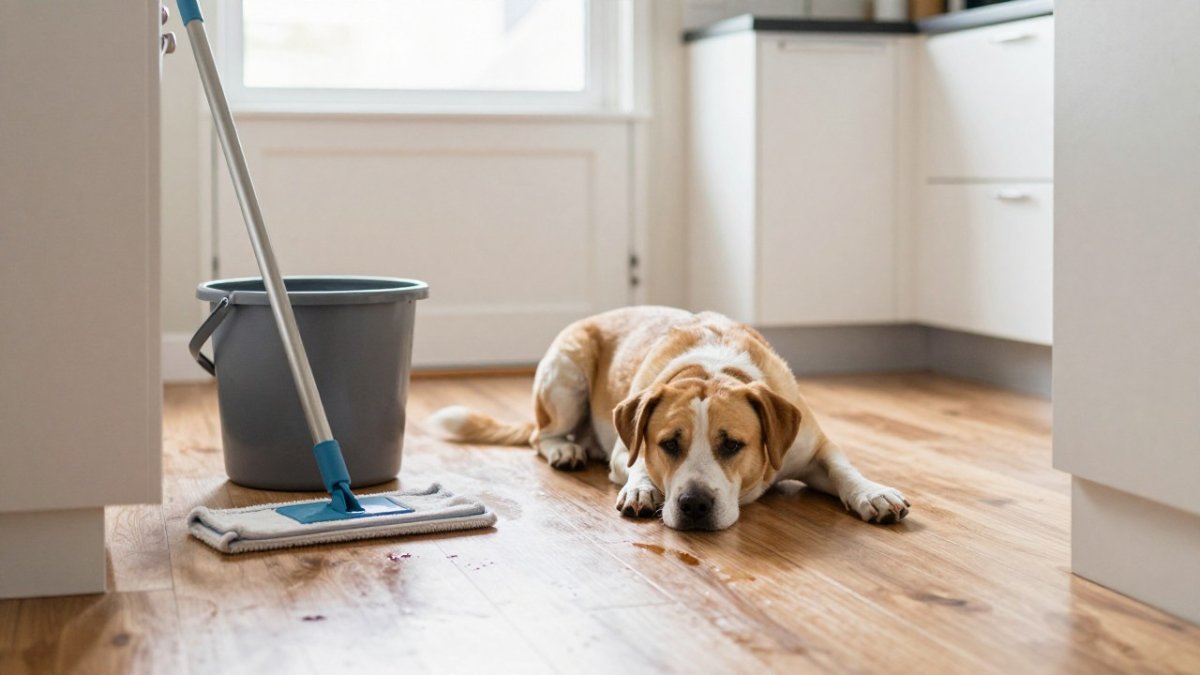
Rinse with plain water, then let the floor air dry fully before your dog walks on it. Drying time depends on humidity and ventilation, but most floors need at least 20 to 30 minutes, and often longer in a damp basement or during rainy weather. Keep the room closed until the floor is dry.
!A dog resting on a freshly mopped hardwood floor beside a bucket and microfiber mop in a bright, lived-in home kitchen
Watch for these signs of residue: a slippery or tacky feel, a cloudy finish, or a pet that keeps licking its paws after walking in the room. If you notice any of these, rinse the floor again with plain water.
Scheduling Your Next Floor Clean with Top Royal Cleaners
If you have two dogs or cats and a busy schedule, professional floor care can take this work off your plate. Find pet friendly cleaning services in Montgomery County near you. Top Royal Cleaners is fully licensed and insured, and we take a pet-friendly approach to every space we clean.
Pricing depends on the size of your home, the flooring types and how often you want service. Visit our website for current prices or a quote. GET QUOTE to request your pet-safe floor cleaning estimate from Top Royal Cleaners. You can also explore our pet-friendly cleaning guide to learn more about protecting pets during any cleaning routine.
Frequently Asked Questions
What can I use to clean my floors that is safe for pets?
Diluted white vinegar, a small amount of baking soda and a few drops of mild dish soap in warm water are the most commonly recommended pet-safe options. Wring the mop well, and let the floor air dry fully before pets walk on it. Avoid strong fragrances and essential oils in concentrated amounts, since cats in particular are sensitive to them. Always test a small hidden area first, especially on sealed hardwood, laminate or natural stone, because vinegar can dull some finishes over time.
Which floor cleaners are safe for cats?
Cats are the most vulnerable to household cleaners because they groom their paws and lick the floor. Phenol-based products, bleach, ammonia and concentrated essential oils are the ingredients to avoid, as they can cause irritation or serious harm. Gentle, diluted solutions of vinegar or mild soap, rinsed with clean water, are a safer choice. Keep cats out of the room until the floor is completely dry and any cleaning smell has faded. If your cat shows drooling, vomiting or lethargy after contact, call your veterinarian right away.
How long should pets stay off the floor after cleaning?
Wait until the floor is completely dry to the touch before letting pets back in. Rinsing with plain water after mopping removes leftover residue that pets could lick from their paws. Open a window or run a fan to speed drying and reduce lingering odors. Sticky or streaky floors usually mean too much cleaner was used, so dilute the solution further next time.
Are natural floor cleaners always safe for pets?
No. Natural does not automatically mean safe. Some plant-based oils, including tea tree, citrus and pine oils, can be toxic to cats and dogs even in small amounts. Undiluted vinegar can also irritate paws and damage certain floor finishes. The safest approach is to use simple, diluted ingredients, avoid essential oils around pets, and check the product label or a trusted source before using any cleaner.