 how-to
9 Steps to Remove Construction Dust From New Floors
Last Updated: November 5, 2026
Quick Summary
To remove construction dust from new floors, clean from the top down: dust walls and ceilings first, wipe windows and vents damp, then vacuum with a HEPA filter and mop hard floors. Wait for the air to settle and repeat the vacuum and mop, because construction dust keeps resettling for days.
- Dust walls and ceilings first with a microfiber cloth on a long pole.
- Wipe windows, sills, and vents damp so dust does not blow back.
- Vacuum floors with a HEPA filter to catch fine particles.
- Mop hard floors with mild water and vinegar, wringing the mop well.
- Wait for the air to settle, then repeat the vacuum and mop.
Table of Contents
- Why Construction Dust Keeps Coming Back on New Floors
- How to Remove Construction Dust From Your New Home Floors Step by Step
- How to Clean Construction Dust From Tile Floors and Furniture
- Frequently Asked Questions
Construction dust settles on everything in a new home and keeps coming back for days after the crew leaves. You can clean most of it yourself with the right tools and order of steps.
Why Construction Dust Keeps Coming Back on New Floors
Construction dust is fine powder that floats through the air and settles slowly onto floors and surfaces.
Clean from the top down, and repeat once the air settles. If you'd rather hand off the rest of the home, a standard apartment clean covers the living areas, bedrooms, kitchen, and bathroom.
How to Remove Construction Dust From Your New Home Floors Step by Step
- Dust walls and ceilings first with a microfiber cloth on a long pole.
- Wipe windows, sills, and vents damp so dust does not blow back.
- Vacuum floors with a HEPA filter to catch fine particles.
- Mop hard floors with mild water and vinegar, wringing the mop well.
- Wait for the air to settle, then repeat the vacuum and mop.
Tools to have ready:
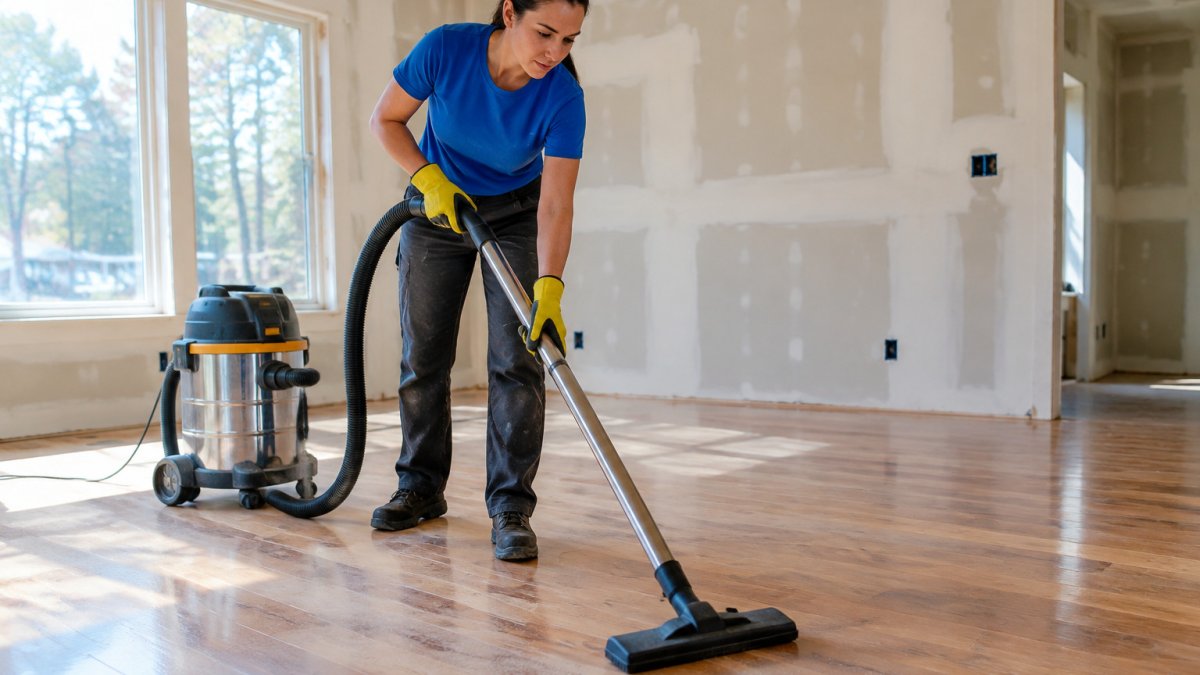
- HEPA-filter vacuum or shop vacuum
- Microfiber cloths and a dust mop
- Spray bottle with a mild cleaning solution
- Wood-safe cleaner for wood floors
The steps below follow the order to clean dust from top to bottom, with the tools needed for each.
| Step | What to do | Key tip |
|---|---|---|
| 1 | Dust walls and ceilings | Use a microfiber cloth on a long pole |
| 2 | Wipe windows, sills, and vents | Wipe damp so dust does not blow back |
| 3 | Vacuum floors | Use a HEPA filter to catch fine particles |
| 4 | Mop hard floors | Mild water and vinegar, wring the mop well |
| 5 | Wait for air to settle | Then repeat the vacuum and mop |
How to Clean Construction Dust From Tile Floors and Furniture
Tile floors and furniture need slightly different care. Use a damp cloth rather than dry dusting, which only pushes fine dust into the air. For stubborn buildup that routine cleaning misses, a professional deep clean tackles grime and dust throughout.
- Tile: Vacuum first, then mop with a mild solution. Rinse the mop often.
- Upholstery: Vacuum with a brush attachment, then wipe with a damp microfiber cloth.
- Wood furniture: Damp wipe, then use a wood-safe cleaner to remove streaks.
Watch out: Do not soak wood floors or furniture. Excess water can cause warping and damage the finish.
If the dust keeps returning or the job feels too big, you can request a quote from Top Royal Cleaners for post-construction cleaning.
Frequently Asked Questions
How do you clean construction dust from tile floors?
Start by vacuuming the grout lines and tile surface with a HEPA vacuum, using the brush attachment to lift fine particles from the joints. Then mop with a mild cleaning solution of warm water and a small amount of pH-neutral cleaner. Rinse the mop often and change the water when it turns gray. Wipe the tile with a clean, damp microfiber cloth to remove any leftover film, and let it air dry. Repeat once the dust settles again to catch anything missed.
Should you vacuum or mop construction dust first?
Vacuum first. Mopping dust before vacuuming turns fine particles into a gritty paste that can scratch floor finishes and smear across the surface. Use a HEPA vacuum so the fine dust is captured rather than blown back into the air. Once the floor is fully vacuumed, mop or damp wipe the hard surfaces to pick up what remains. Work from the farthest corner toward the exit so you do not walk through cleaned areas.
How long does it take for construction dust to go away?
Fine construction dust can keep settling for days or weeks after work stops, especially when air moves through the house from HVAC systems or open windows. Plan on cleaning the floors at least twice: once after the heavy work finishes and again a few days later. Replace or clean HVAC filters during this period, since they can release trapped dust back into the rooms. A final cleaning once the dust has stopped reappearing gives the best result.