 how-to
How to Clean Blinds Effectively: Pro Methods
Table of Contents
- What You'll Need to Clean Blinds Effectively
- Best Tools for Cleaning Blinds: What Actually Works
- Dust vs. Deep Clean: Start With the Right Approach
- How to Clean Blinds Without Removing Them
- How to Deep Clean Blinds in the Bathtub
- Material-Specific Cleaning: Wood, Aluminum, and Fabric
- How Often Should You Clean Blinds? A Realistic Schedule
- Common Mistakes and Quick Fixes
- Frequently Asked Questions
Last Updated: September 7, 2026
Blinds trap dust, pollen, and grease in places you cannot see until the sunlight hits them just right. Learning how to clean blinds effectively comes down to matching your method to the material. With over 15 years of experience, we know the fastest way to ruin a blind is using the wrong technique. This guide breaks down the exact tools, timelines, and step-by-step methods that keep your blinds dust-free without damaging slats, cords, or fabric. The secret is a simple rule: dust regularly, deep clean only when needed, and always check the material before you start.
What You'll Need to Clean Blinds Effectively
Gathering the right supplies before you start prevents damage and saves you from stopping mid-task. The core toolkit includes a microfiber cloth, a vacuum with a brush attachment, mild detergent or dish soap, and a soft-bristled brush for textured surfaces.
The single most important supply is not a tool at all, it is knowing which cleaners are chemically compatible with your blind's finish. Using the wrong product is the fastest way to ruin a set of blinds.
Cleaner Compatibility by Material
Wood and faux wood: Use only cleaners labeled wood-safe or a few drops of dish soap diluted in water. Never use alcohol-based sprays, ammonia, or vinegar on real wood, these strip the protective polyurethane or lacquer finish, leaving the wood vulnerable to moisture damage and discoloration (woodmagazine.com). Faux wood (typically PVC or composite) is more tolerant but can still swell at seams if exposed to harsh solvents.
Aluminum and vinyl: These handle most mild cleaners, including diluted dish soap and white vinegar solutions. However, avoid anything with bleach or citrus oils, which can etch the protective coating and cause dull spots. Commercial degreasers are unnecessary, warm water and dish soap cut kitchen grease effectively.
Fabric and cellular shades: Check the manufacturer's tag before applying any liquid. Most polyester and cotton blends tolerate mild detergent, but some specialty fabrics (silk, linen, or flame-retardant treated) require dry cleaning only. Never use bleach, even diluted, on colored fabric shades, it causes irreversible fading.
The Two-Bucket System for Large Homes
If you are cleaning more than three windows in one session, set up a two-bucket system: one with your cleaning solution and one with clean rinse water. Dipping a dirty cloth back into your solution contaminates it with grime, leaving a thin film on every subsequent slat. The rinse bucket keeps your solution effective for the entire job.
Specialty Tools Worth the Investment
A dedicated blind-cleaning tool with microfiber prongs (available at most hardware stores for $10-$15) cleans three to four slats in a single pass and is worth it if you have more than five windows with blinds. For cellular shades, a soft paintbrush or makeup brush works better than a cloth for getting into the honeycomb pockets without crushing the fabric. Keep a lint roller on hand for quick touch-ups on fabric shades between deep cleans.
For homes with multiple sets of blinds, assign each material its own cloth, using the same rag on wood and then aluminum transfers oils and residues that can dull finishes. Color-code your cloths or keep them in separate labeled bags to avoid cross-contamination.
Best Tools for Cleaning Blinds: What Actually Works
The best tools for cleaning blinds prioritize gentle contact over aggressive scrubbing. A microfiber cloth is the workhorse because it traps dust with static electricity instead of pushing it into the air, and it will not scratch delicate finishes.
A vacuum attachment is your second essential tool. Running the brush attachment across closed slats pulls loose dust out of the headrail and cord mechanism, areas a cloth cannot reach. For venetian and vertical blinds, a soft-bristled brush or a dedicated blind cleaner with multiple prongs speeds up the job considerably. Skip abrasive sponges and harsh chemical sprays, which strip finishes and leave residue that attracts more dust. For stubborn grease, a small amount of dish soap diluted in water works better than any commercial degreaser.
Dust vs. Deep Clean: Start With the Right Approach
Understanding the difference between dusting and deep cleaning saves you hours of unnecessary work. Dusting is a quick weekly task that removes surface buildup, while deep cleaning involves soaking or washing the blinds to remove embedded grime, grease, and discoloration.
Most blinds only need a deep clean every few months, but kitchens and homes with pets or smokers require it more often. A simple test: run your finger across a slat. If you see a clean line, dusting is enough. If the slat feels tacky or shows water spots, schedule a deep clean. Starting with the right approach protects the material and prevents you from over-washing blinds that simply need a quick wipe down.
How to Clean Blinds Without Removing Them
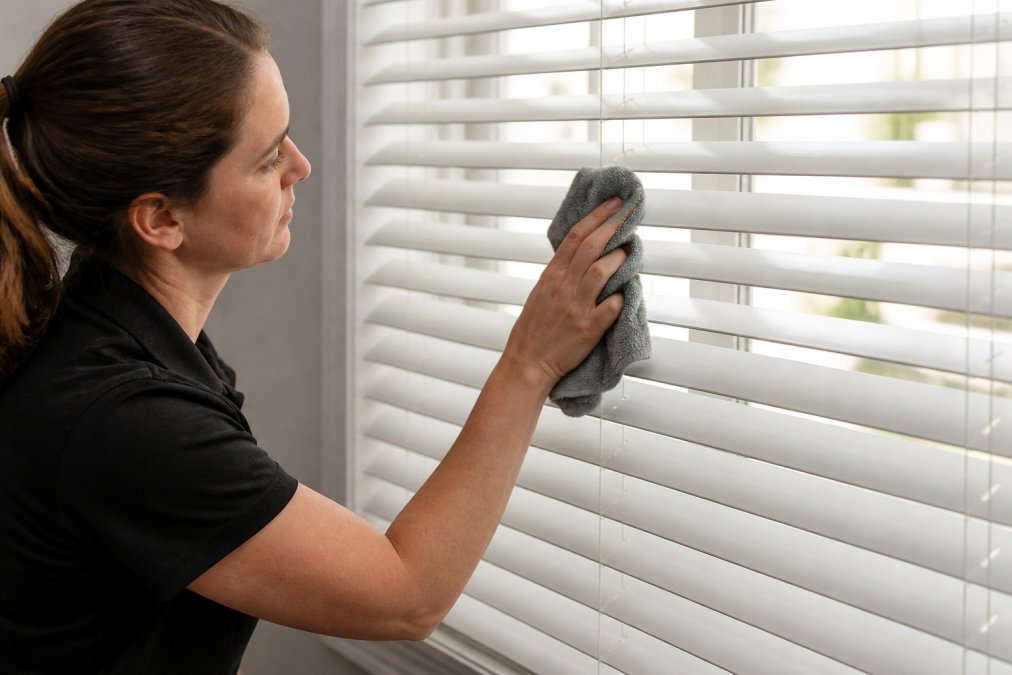
Cleaning blinds in place is the fastest method for routine maintenance and works well for aluminum, vinyl, and faux wood. Start by dusting with your vacuum brush attachment, working from the top slat down so debris falls onto the towel below.
For a deeper clean without removal, mix a few drops of mild detergent into a bowl of warm water. Dip a microfiber cloth into the solution, wring it out thoroughly, and wipe each slat from the center outward. A damp cloth, not a wet one, prevents water from seeping into the cord mechanism, which can cause corrosion and fraying. Use a second dry cloth to buff the slats and prevent water spots. This method takes about five minutes per window and handles most routine grime without the hassle of taking the blinds down.
How to Deep Clean Blinds in the Bathtub
When blinds have years of buildup or have yellowed from kitchen grease, an immersion soak in the bathtub is the most thorough solution. This method works best for aluminum, vinyl, and some faux wood blinds, but never submerge real wood or fabric shades.
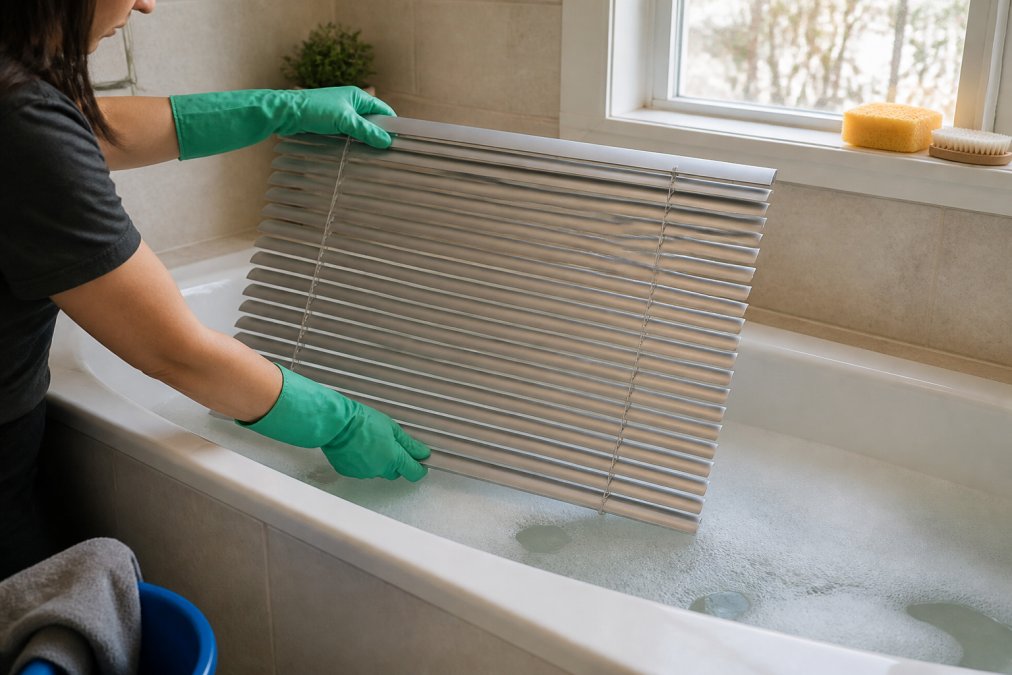
Remove the blinds from the window and lower them fully. Fill the tub with lukewarm water and add a few squirts of dish soap, which cuts grease without harming the finish. Submerge the blinds completely and let them soak for 15 to 30 minutes. Use a soft sponge to wipe each slat, paying extra attention to the ends where dust collects. Rinse thoroughly with clean water to remove all soap residue, then hang the blinds over the tub or a shower rod to air dry. Do not reinstall them until every slat is completely dry, since trapped moisture can warp materials and promote mildew.
Material-Specific Cleaning: Wood, Aluminum, and Fabric
Different materials react differently to water and chemicals, so the most important step in how to clean blinds effectively is identifying what your blinds are made of. Using the wrong method is the leading cause of warped slats, faded colors, and torn fabric.
Wood and Faux Wood Blinds
Real wood blinds warp and discolor when exposed to excess moisture. Clean them with a dry microfiber cloth or a vacuum brush attachment only. For stubborn spots, wring a cloth out in a solution of water and a few drops of wood-safe cleaner until it is nearly dry, then wipe gently and buff immediately. Faux wood is more forgiving and handles the damp cloth method well, but avoid soaking it in the bathtub. Excess water can seep into the seams and cause the material to swell or peel.
Aluminum and Vinyl Blinds
Aluminum and vinyl blinds are the most durable and handle the bathtub soaking method without issue. They resist water, grease, and most mild cleaners, making them ideal for kitchens. Use warm soapy water and a soft cloth to cut through cooking residue. Avoid abrasive pads, which scratch the surface and create dull spots that attract more dirt. These materials air dry quickly, so you can reinstall them within the hour.
Fabric and Cellular Shades
Fabric and cellular shades require the gentlest approach because water can stain or shrink them. Vacuum both sides regularly with a brush attachment to remove dust. For spot cleaning, dab a small amount of mild detergent diluted in water onto the stain using a lint-free cloth. Do not rub, as friction damages the fibers. If a full clean is necessary, check the manufacturer's label first. Many fabric shades are not washable and require professional cleaning to avoid permanent damage.
How Often Should You Clean Blinds? A Realistic Schedule
Dust blinds weekly and deep clean them every three to six months for most homes (cleanipedia.com). This schedule keeps allergens down and prevents the buildup that makes deep cleaning harder later.
Homes with pets, smokers, or kitchens near the windows should dust twice a week and deep clean every two to three months. Bedrooms and formal living areas with low traffic can stretch to monthly dusting. Seasonal changes are a good reminder: deep clean blinds when you swap out your winter and summer curtains. Consistent maintenance extends the life of your blinds, keeps the cord mechanism operating smoothly, and reduces the need for replacement.
| Area | Dusting Frequency | Deep Clean Frequency |
|---|---|---|
| Living room | Weekly | Every 3-4 months |
| Kitchen | 2x per week | Every 2-3 months |
| Bedroom | Monthly | Every 6 months |
| Homes with pets | 2x per week | Every 2-3 months |
Common Mistakes and Quick Fixes
The most common mistake is using a wet cloth on wood blinds, which causes warping and finish damage that cannot be reversed. Always start dry and introduce moisture only when necessary. Another frequent error is cleaning slats from bottom to top, which smears dust back onto already cleaned surfaces.
Cleaning often reveals underlying issues with the blind mechanism itself. Here is how to troubleshoot the problems you are most likely to encounter mid-cleaning.
Broken or Bent Slats
Aluminum slats bend easily when you grip them too firmly while wiping. To fix a minor bend, place the slat on a flat surface and roll a glass bottle or rolling pin over the damaged area, this usually restores the curve without breaking the hinge. For a cracked or snapped slat, replacement slats are available at most home improvement stores; measure the width and hole spacing before purchasing. Most vinyl and aluminum blinds allow you to slide a damaged slat out of the ladder strings and thread a replacement in without taking the entire blind down. Real wood slats that crack cannot be repaired, replacement is the only option.
Tangled or Sticking Lift Cords
Dust buildup in the cord lock mechanism is the most common cause of cords that stick or refuse to hold position. Use a can of compressed air to blow out the headrail, then apply a dry lubricant (silicone spray) to the cord lock mechanism only, never oil, which attracts dust and gums up over time. If cords are twisted, untangle them by hand while the blind is fully lowered. For blinds with a continuous cord loop, check that the loop is not twisted around itself inside the headrail; untwisting usually resolves tension issues.
Slats That Won't Close Evenly
Uneven slats typically mean the ladder strings have slipped. Open the blind fully and inspect where the ladder strings attach to the tilt wand mechanism. If one side has slipped off its drum, gently guide it back into place. For blinds where the tilt mechanism itself is stripped, replacement tilt wands cost under $10 and swap out in minutes with a screwdriver.
Water Spots After Cleaning
If your blinds have developed water spots after cleaning, buff them with a dry microfiber cloth immediately. For stubborn mineral deposits from hard water, wipe the affected slats with a cloth dampened in a 50/50 white vinegar and water solution, then dry immediately (goodhousekeeping.com). This works on aluminum and vinyl but never on real wood, for wood, use a wood-safe polish instead.
Mildew on Fabric Shades
Mildew on fabric shades usually means they were cleaned with too much water. Treat the area with a vinegar and water solution and allow it to air dry completely. If the mildew has penetrated the fabric and left a stain, professional cleaning is the only reliable remedy, home treatments often set the stain permanently.
When to Call a Professional
If the headrail is bent, the cord mechanism is completely seized, or the blinds are older than 10 years and have multiple issues, replacement is often more cost-effective than repair. A new set of aluminum blinds can be an option, while professional repair services are also available. For high-end wood or custom-sized blinds, professional repair can be a worthwhile investment.
Frequently Asked Questions
What is the quickest way to clean blinds?
For a fast refresh, use a vacuum with a soft brush attachment or a microfiber cloth wrapped around kitchen tongs. Close the blinds flat, wipe from the center slat outward, then flip and repeat. This removes surface dust in about five minutes per window. For sticky grease, spot clean with a damp cloth and a drop of dish soap. This method works for aluminum, vinyl, and faux wood blinds.
Is it better to dust or wash blinds?
Dusting handles routine upkeep, but washing is required to remove grime, grease, and allergens. Dust blinds every one to two weeks with a microfiber cloth. Wash them every three to six months, or more often in kitchens where cooking grease settles on slats. Deep cleaning in the bathtub restores the original finish and removes buildup that dusting leaves behind.
Can you use a vacuum on window blinds?
Yes, use a soft-bristled brush attachment to avoid scratching the surface. Hold the slat with one hand to keep it steady while you vacuum with the other. Work from the top slat down so dust falls onto lower slats you have not cleaned yet. This method is safe for aluminum, vinyl, and faux wood blinds, but skip it for delicate fabric shades.
How do you clean blinds that haven't been cleaned in years?
Heavily soiled blinds need the bathtub soaking method. Fill the tub with warm water and a mild detergent, then submerge the blinds fully. Let them soak for 30 to 60 minutes to loosen caked-on dust. Scrub each slat with a soft sponge, rinse with clean water, and hang them to air dry before reinstalling. Check the cords for wear while they are wet.