 How-to
How Do You Stop Dust Buildup on Window Blinds?
Last Updated: November 9, 2026
Quick Summary
Dust blinds once a week to stop dust buildup from starting, since a quick pass with a duster takes a minute or two per window. Dust twice a week if you have pets or live near a busy road, and add a monthly deep cleaning on top of routine dusting.
- Dust settles on the top edges of horizontal slats first, so watch for a visible gray line.
- A microfiber cloth is the safest all-purpose tool and traps dust best.
- Skip feather dusters and dry rags because they knock dust back into the room.
- Clean blinds without removing them by closing the blinds and dusting slat by slat, top to bottom.
- Rub dryer sheets lightly on aluminum, vinyl, and faux wood slats to cut static between cleanings.
Table of Contents
- Why Dust Settles on Window Blinds So Fast
- How Often to Dust Blinds for Less Buildup
- Best Tools for Dusting Blinds
- How to Clean Window Blinds Without Removing Them
- How to Clean Fabric Blinds by Hand
- Cut Static and Dust Sources to Keep Blinds Dust-Free Longer
- Frequently Asked Questions
Why Dust Settles on Window Blinds So Fast
Dust lands on window blinds faster than almost any other surface in your home. The reason is simple: blinds sit right against the glass, where air moves constantly and static builds up.
Every time you open a window or your HVAC system cycles on, air pushes fine particles against the slats. Those particles stick.
Wooden blinds and fabric blinds attract the most dust. Their surfaces are rougher than metal or vinyl, so particles grab hold instead of sliding off.
Here is how dust buildup on window blinds starts and spreads:
- Airborne dust enters through open windows and doorways
- Static electricity pulls particles onto slats and window ledges
- Dust settles on top edges of horizontal slats first
- A thin layer traps more dust, and buildup speeds up
- Window tracks and vents collect the overflow
A steady cleaning routine helps stop this cycle. Blinds that get regular attention never reach the heavy, sticky stage.
How Often to Dust Blinds for Less Buildup
Dust blinds once a week to keep buildup from starting. A quick pass with a duster takes a minute or two per window and stops dust from layering.
Your dust frequency depends on a few things:
- Weekly dusting works for most homes
- Twice a week if you have pets or live near a busy road
- Every other week for rooms you rarely use
- Monthly deep cleaning on top of routine dusting
Watch the top edges of the slats. When you can see a visible gray line, you have waited too long.
Open windows speed up dust buildup. If you keep windows open often, check blinds more frequently and wipe down window ledges and window tracks at the same time.
How often you dust depends on your home and habits, so match the schedule to the conditions.
| Situation | Dusting frequency |
|---|---|
| Most homes | Weekly dusting |
| Pets or a busy road nearby | Twice a week |
| Rooms you rarely use | Every other week |
| On top of routine dusting | Monthly deep cleaning |
Best Tools for Dusting Blinds
The best tool depends on the blind material and how much dust has built up.
Here is how the main options compare on speed, effectiveness, and material compatibility:
- Microfiber cloth: Slowest per slat but traps dust best; safe on aluminum, vinyl, faux wood, wood, and most fabric. Use dry for weekly dusting and barely damp for monthly cleaning. Wash after every use so the fibers keep grabbing instead of smearing.
- Vacuum with brush attachment: Fast for heavy buildup and a practical option for dust-sensitive households because it pulls dust into the machine. Use low suction on fabric and faux wood; keep the brush moving so it does not scratch coated slats. A vacuum with a HEPA filter is worth using if dust triggers allergies.
- Dust-catching brush (blind duster): Cleans both sides of a slat in one pass and is the quickest manual option for wide windows. Safe on aluminum, vinyl, and faux wood; use light pressure on wood and fabric so you do not snag the surface.
- Three-prong blind cleaner tool: Cleans several slats at once and speeds up weekly dusting on horizontal blinds. Best on aluminum and vinyl; skip it on fabric and delicate wood finishes where the prongs can catch.
- Damp cloth with mild soap: Needed for monthly deep cleaning and for sticky buildup that dry tools cannot lift. Wring it out until barely damp on wood and faux wood.
Skip feather dusters and dry rags. They knock dust loose and send it back into the room, which is the opposite of what you want near a window.
One insider tip: keep two microfiber cloths on hand. Use one dry for weekly dusting and one slightly damp for monthly cleaning. Wash both after every use so they keep grabbing dust.
How to Clean Window Blinds Without Removing Them
You can clean window blinds without removing them in about ten minutes per window. The key is working top to bottom and cleaning slat by slat with the right cloth.
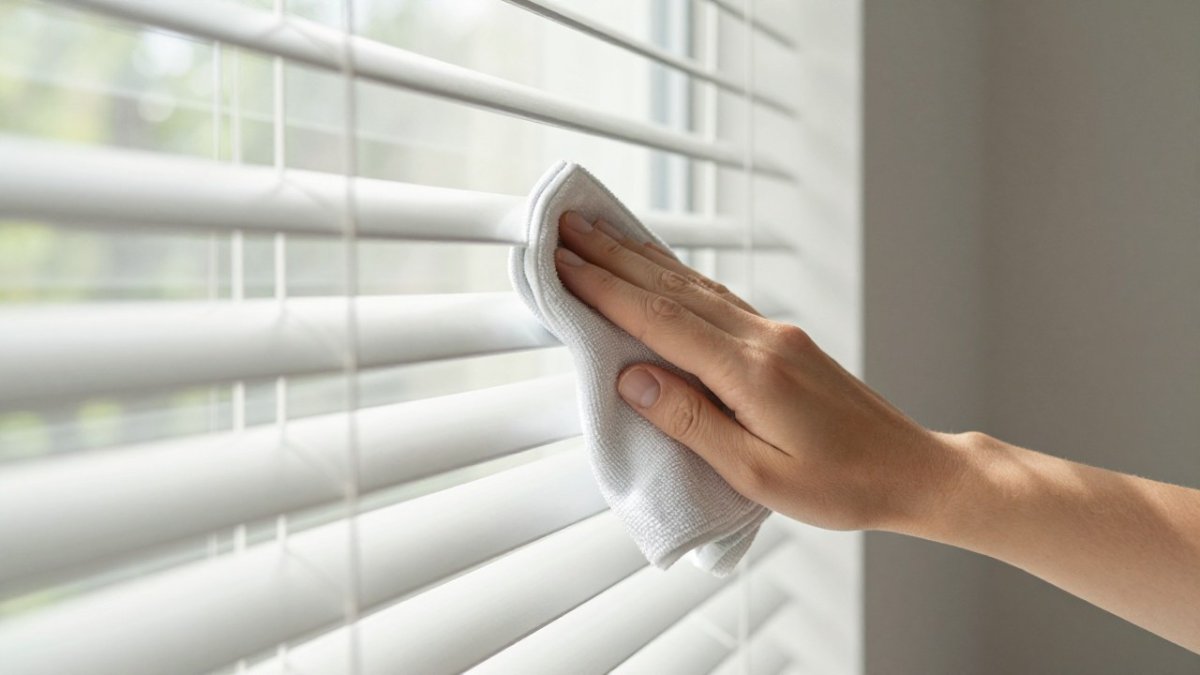
Follow these steps:
- Close the blinds and dust the flat side with a microfiber cloth
- Tilt the slats the other way and dust the back side
- Wipe each slat from the center outward so dust falls away from the glass
- Vacuum the window tracks and ledges with the brush attachment
- For a deeper clean, wipe slats with a cloth dampened in warm water and mild soap
- Rinse the cloth often and dry the slats with a clean cloth
Watch out: too much water on wooden blinds can warp the slats and dull the finish. Wring the cloth out until it is barely damp.
For more detailed methods, see our guide on how to clean blinds effectively. If your blinds are wood, the safe method is covered in cleaning wooden blinds without damaging the finish.
How to Clean Fabric Blinds by Hand
Clean fabric blinds by hand with a vacuum brush attachment on low suction, then spot clean stains with a mild soap solution. Never soak fabric blinds in water.
Start with a gentle vacuum pass on both sides to lift loose dust. Then mix a few drops of mild soap in warm water and dab stains with a cloth. Blot, do not rub, and let the fabric air dry fully before closing the blinds.
For deeper fabric cleaning, check the manufacturer's label first. Some fabric blinds can handle a light cleaning solution; others cannot. A dryer sheet rubbed lightly over the fabric can cut static between cleanings.
Cut Static and Dust Sources to Keep Blinds Dust-Free Longer
A dust-free home starts with fewer dust sources, not more cleaning.
Safe use of anti-static products. Not every household remedy belongs on every slat. Use this as a starting point and always test on one slat at the end of a blind before working across the window:
- Dryer sheets: Rub lightly along aluminum, vinyl, and faux wood slats to cut static between cleanings. Skip them on wood and fabric, where the coating can leave a residue that grabs dust.
- Fabric softener on a damp cloth: A little fabric softener on a barely damp cloth works on vinyl and aluminum. Do not use it on wood or fabric blinds, and do not leave slats wet.
- Anti-static spray made for window coverings: The safest option when the label lists your blind material. Spray a cloth, not the slats, and test one slat first. Avoid silicone-heavy sprays on wood and coated aluminum, since they can leave a sticky film.
- What to avoid: Oil-based polishes, furniture spray, and anything with a heavy fragrance or wax on fabric blinds. These trap dust rather than repel it.
Reduce dust sources around the window. Static pulls dust to the slats, but the dust has to come from somewhere. These steps cut the supply:
- Check window seals and weatherstripping; gaps let in fine dust on windy days
- Clean window tracks and ledges weekly, since they collect the overflow from the slats
- Vacuum baseboards and floors near windows, because dust rises from below
- Wash bedding and curtains often if pets sleep nearby
- Change HVAC filters on schedule and keep vents near windows clear
- Keep windows closed on windy days and run a HEPA-filter vacuum or air purifier in rooms where dust builds fastest
For allergy sufferers, low-dust practices matter as much as frequency: damp wiping and vacuuming with suitable filtration keep dust out of the air instead of moving it around. Our guide on how to clean baseboards easily covers the dust sources below your windows, and if pets are the main culprit, learn how to remove pet dander at the source.
If the workload feels like too much, request a quote and let a professional team take over the recurring cleaning.
Dusty blinds are one of those jobs that never really end, which is why so many homeowners would rather hand it off. At Top Royal Cleaners, we handle deep cleaning for homes and offices with fully licensed, insured crews, a pet-friendly approach, and more than 15 years of local experience.
Frequently Asked Questions
What can I put on my blinds to keep dust off?
A dryer sheet is the most common household option. Wiping slats with a used dryer sheet leaves a thin anti-static film that makes it harder for dust to cling. You can also use a fabric-softener-dampened cloth. Apply either lightly and let the slats dry before closing the blinds. Avoid soaking wooden or fabric blinds, and reapply every few weeks as the film wears off. For heavier dust buildup, clean first, then treat.
How often should you clean your blinds to prevent buildup?
Dust horizontal blinds weekly with a microfiber cloth or duster, and do a deeper slat-by-slat clean monthly. Blinds in kitchens, bathrooms, or homes with pets and open windows collect dust faster, so shorten that interval. A realistic maintenance schedule beats an occasional deep clean: five minutes of weekly dusting keeps dust from turning into a sticky film that needs warm water and mild soap to remove.
Does using a dryer sheet on blinds actually prevent dust?
It helps, but it is not a permanent fix. Dryer sheets reduce static electricity, which is one reason dust sticks to plastic, vinyl, and aluminum slats. The effect fades within a few weeks, and it does nothing for dust already sitting on the slats. Use it after cleaning, not instead of cleaning. Skip it on fabric blinds, where residue can attract more dust, and test a small area on wooden blinds first.
What blinds don't get dusty?
No blind is completely dust-free, but vertical blinds and smooth vinyl or aluminum horizontal blinds shed dust more easily than fabric or wood. Roller shades and cellular shades with fewer horizontal surfaces collect less visible dust. Whatever the material, dust buildup comes from static, open windows, and indoor dust sources, so a regular cleaning routine matters more than the blind type you choose.